

























































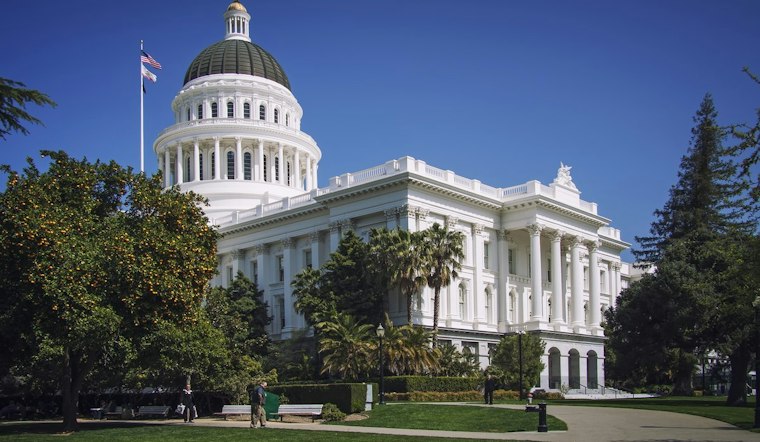
On June 14, 2024, the California State Controller's Office approved wiping away more than $57 million in interest owed on unclaimed property accounts — all in a single day, covering more than 4,200 separate payments. The beneficiaries included Merrill Lynch, which received a $1,918,901 waiver, and National Financial Services, which got $1,678,834 forgiven. Some businesses had owed the state more than $1 million each.
The scale of that one-day forgiveness stands out against the office's other recent totals: as reported by the Sacramento Bee, the Controller's Office forgave just under $3.9 million in interest overall in 2023, and a combined $2.9 million in 2025. Corporations, insurance companies and other businesses holding unclaimed property owed interest on accounts or assets they'd failed to properly report or turn over to the state, under rules that require property holders to make annual reports, attempt to contact owners, and eventually deliver uncollected property to the Controller's office.
Under California Code of Civil Procedure Section 1577, those property holders are subject to a mandatory interest assessment of 12 percent per year, accruing from the original due date, according to Justia Law. That rate applies automatically unless a holder qualifies for an exemption or waiver — and the state does offer an escape hatch. Property holders can file letters requesting an interest waiver, and the Controller's Office can grant a reprieve when the failure to report or deliver property resulted from reasonable cause, which includes circumstances outside the holder's control or incorrect information provided by the office itself.
A Statute of Limitations Argument That Doesn't Appear in the Law
A Controller's Office spokesperson told the Sacramento Bee that the agency forgave the June 2024 amounts because a three-year statute of limitations had passed to collect the debt in court, and that preparing litigation would have been costly to the state, time-consuming, and unlikely to change the results. But California state law does not mention the statute of limitations as a reason to waive interest owed, per the same Sacramento Bee reporting.
That explanation runs up against decades-old judicial precedent. In the 1981 case Travelers Express Company v. Cory, the Ninth Circuit Court of Appeals rejected a statute-of-limitations defense in that case, while explaining that California's three-year limitations statute applies to state actions and that accrual depends on compliant reporting, according to Justia Law. The ruling did not establish blanket immunity from ordinary civil time limits.
State regulations also draw narrower lines around what counts as a legitimate waiver justification than a statute-of-limitations defense would suggest. Title 2, Section 1172.90 of the California Code of Regulations defines reasonable cause for an interest waiver as the exercise of ordinary business care and prudence, explicitly limiting valid excuses to circumstances outside the holder's control or reliance on incorrect written advice from Controller staff, according to the Legal Information Institute. The Controller's Office's own waiver letters for the 2024 batch stated that the matters satisfied or arguably met the legislative standard for a waiver, per the Sacramento Bee's review.
Office Blames Staffing Backlog for the Size of the 2024 Total
The Controller's Office said the 2024 total was much higher than other years because it was working through a backed-up workload caused by staffing limitations, and a spokesperson said the June 14 waivers reflected the conclusion of a broader cleanup of accounts carried over from prior administrations. The waived accounts from that batch had an average age of 15 years, compared with an average of three to five years for accounts waived in 2023 and 2025.
The unclaimed property division had just four staff members in 2019 and still had four in 2024, with the office noting it had one additional support staff member in 2024 compared with five years earlier. Legal staff within the office also work on unclaimed property cases. Former Controller Betty Yee, who served in the role from 2015 to 2023, found the large number of one-day waivers unusual and said a waiver request is required before any forgiveness can be granted.
The compliance gap the office is working against is substantial. Legislative analysis published during the 2022 passage of Assembly Bill 2280 estimated that only about 2 percent of registered business entities in California were actively compliant with state unclaimed property reporting rules, according to Watters Unclaimed Property Consulting. That law created the state's first Voluntary Compliance Program in over two decades, letting the Controller's Office waive the mandatory 12 percent penalty for entities that complete state training and self-report past-due property, as detailed by Deloitte.
Cohen's Office Oversees a $15 Billion System Amid a Re-Election Bid
California's unclaimed property system oversees roughly $15 billion in assets as of June, covering everything from unused bank accounts to uncashed checks from utility and insurance companies. Malia Cohen, elected Controller in 2022, has said the office returns roughly $1.5 million daily to people who successfully file claims, according to an op-ed cited by the Sacramento Bee, and she is running for a second term in November. The office also manages public money, audits state agencies, and runs the payroll system for state workers.
The Controller's Office returns unclaimed assets to rightful owners. The Controller's Office is also facing scrutiny on another front: in September, public school advocacy organizations including the California Teachers Association named Cohen as a co-defendant in a lawsuit alleging the state unlawfully withheld $3.9 billion in voter-approved Proposition 98 education funding, as Hoodline previously reported.



