

























































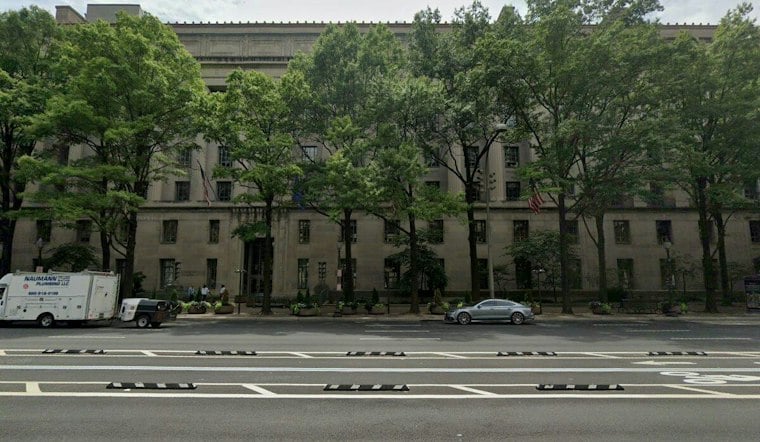
The Justice Department has filed denaturalization actions against 40 foreign-born Americans, accusing them of lying or omitting facts on their citizenship applications to cover up crimes ranging from acting as an agent for a foreign government to voluntary manslaughter. The cases also include a man convicted by guilty plea in June 2022 and sentenced for aggravated sodomy against a special-needs man. The complaints were filed in multiple U.S. district courts between August 21 and October 2, and officials describe the batch as the largest single-period denaturalization filing of the Trump administration.
Largest Single-Period Filing Yet, DOJ Says
According to a Justice Department announcement, the 40 individuals are accused of committing immigration fraud by concealing serious offenses when they applied for citizenship. NBC News, citing a draft version of the announcement it obtained, reported that the Justice Department is taking action to revoke citizenship from the 40 people over fraud on their applications.
Denaturalization is a civil court process, not an automatic revocation — the government still has to prove its case. Under 8 U.S.C. § 1451(a), a court can strip someone's citizenship only if it finds that the naturalization was illegally procured or obtained through concealment of a material fact or willful misrepresentation, according to the Congressional Research Service via Congress.gov. Criminal denaturalization prosecutions brought under a separate statute carry their own protections, including a 10-year statute of limitations, a right to counsel, and a requirement that the government prove its case beyond a reasonable doubt, the same research service notes.
Part of a Much Bigger Surge in Filings
This single batch of 40 cases lands amid a dramatic acceleration in denaturalization activity nationwide this year. The federal government filed only eight denaturalization complaints in all of 2025, according to data from TRAC, a research organization that tracks federal court filings. Filings “shot up dramatically” in May, per reporting from the Boston Globe, which found the government had filed nearly 40 denaturalization cases by mid-June — more than double what had typically been filed in any full calendar year over the prior two decades.
TRAC's own count shows at least 15 complaints filed in May 2026 alone, with 18 filed by June 12 — and a total of 166 denaturalization complaints identified across federal district courts going back to 2008. The Trump administration has reportedly set its sights even higher, with Newsweek reporting the administration is planning to file at least 250 denaturalization cases during the 2026 fiscal year. The Boston Globe also reported that the administration asked U.S. Citizenship and Immigration Services field offices to refer 100 to 200 potential denaturalization cases per month to the Justice Department for review.
A Sharp Break From Historical Norms
The scale of this year's push stands in stark contrast to decades of federal practice. Between 1990 and 2017, the government filed an average of just 11 denaturalization cases per year, according to CBS News. TRAC's longer-term data puts the historical pace even lower, at roughly 0.6 civil denaturalization lawsuits per month — well under one a month — across most of the past several decades.
Today's enforcement push traces its roots to an earlier effort known as Operation Janus, which TRAC notes was established by the Obama administration in 2010 to identify naturalized citizens who may have used fraudulent identities to obtain their status. The current scale of filings, however, far outpaces that earlier initiative, reflecting what multiple outlets describe as a deliberate expansion of denaturalization as an enforcement tool under the current administration.
None of the evidence reviewed establishes whether citizenship has actually been revoked for any of the 40 people named in this latest round — the filings represent the opening of civil proceedings, not a final outcome. The exact court districts and filing dates tied to each individual case were likewise not detailed in the materials available, leaving many of the specifics of who is affected, and where, still unconfirmed.





