

























































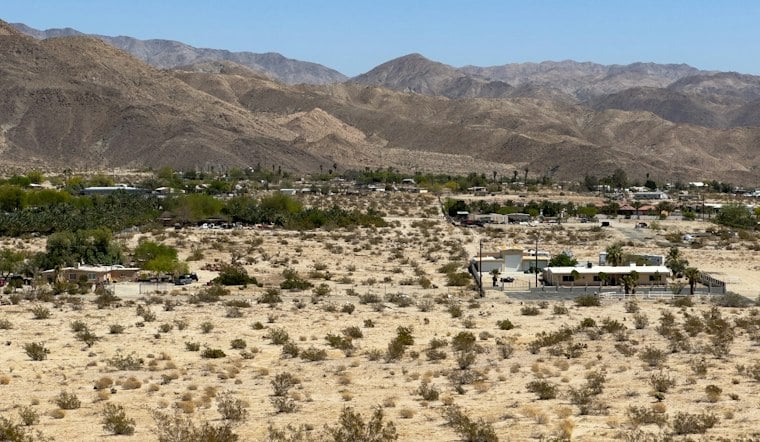
When rainwater started pouring into Mario Ramirez's Indio Hills home earlier this week, he evacuated his wife and two sons first and worried about the damage later. What he found afterward was arguably just as unsettling as the flood itself: his homeowners insurance company told him his policy does not cover the floors ruined by the water that soaked through his house.
The flooding struck as a storm system dumped heavy rain across the Coachella Valley on Monday night, according to NBC Palm Springs, which first reported on Ramirez's ordeal. The outlet reports that residents across Indio Hills have spent the days since cleaning up and repairing their homes after the flash flooding tore through the area. Ramirez told the station his wife and both sons made it out safely, but the floors of his home were left damaged by the floodwater that rushed in.
The same storm triggered flash flooding along a wash near Dillon Road and Sunny Rock Road, stranding at least one vehicle in mud and sand, according to KESQ. The California Highway Patrol first reported the wash flooding around 10:20 p.m. Monday and closed Dillon Road at Avenue 44 until road crews cleared the area around 6:30 a.m. Tuesday, the station reported.
A Policy That Excludes the Water That Hit Hardest
When Ramirez contacted his insurance company after the flood, he learned his standard homeowners policy does not cover ground water that enters a home after touching the ground outside, the station's report notes. He said the experience left him feeling blindsided by the lack of clarity about what flooding meant to his provider.
That distinction is not unique to Ramirez's policy. Federal Emergency Management Agency guidelines state that standard homeowners insurance strictly excludes damage caused by rising ground or surface water, covering only sudden, internal plumbing failures such as burst pipes or appliance overflows, according to guidance cited by Alfa Insurance. Once water touches the ground outside before entering a residence, it is classified legally as flood water, which standard policies do not touch.
Separate coverage through the National Flood Insurance Program comes with its own legal hurdles. Under NFIP terms, a flood is defined as a temporary condition of complete or partial inundation affecting two or more acres of normally dry land or two or more adjacent properties, per FloodSmart.gov. That threshold means localized water entry affecting only a single structure, without submerging two acres or adjacent land, can trigger additional scrutiny on a claim.
Even Buying Coverage Now Would Come Too Late
Even if Ramirez wanted to purchase flood coverage today, it would not have helped him during this storm. Voluntary NFIP policies carry a mandatory 30-day waiting period from the date of premium payment before coverage takes effect, according to the Flood Insurance Guru. That rule prevents property owners from buying coverage right before or during active storm warnings, closing off a last-minute option for families watching a forecast turn bad.
The financial stakes of going without that coverage are steep. FEMA data shows that just one inch of floodwater in a residence can cause approximately $25,000 in structural and personal property damage, with average NFIP claims paying out $82,614 between 2020 and 2024, per reporting from TheStreet. Even shallow runoff can destroy flooring, drywall, and electrical systems.
Ramirez is far from alone in being caught without a safety net. Fewer than 2% of California homeowners carry a dedicated flood insurance policy, according to data from the California Department of Insurance, leaving the overwhelming majority of households unprotected against surface water runoff. Nationally, nearly one-third of all residential flood insurance claims between 2014 and 2024 originated from properties outside designated high-risk flood zones, FloodSmart.gov data shows, meaning owners who assume they live somewhere low-risk routinely skip buying coverage altogether.
Even California's insurer of last resort offers no backstop. The state-backed FAIR Plan, frequently used by residents dropped by private insurers, excludes standard storm-related flood or mudslide damage. Separate difference-in-conditions coverage will not add flood or mudslide protection. The FAIR Plan is built primarily to cover fire and smoke perils.
A Family Pushes Forward, With a Warning for Neighbors
With repairs underway, Ramirez put his work on hold to focus on fixing his home and notifying clients, according to the NBC Palm Springs report. He believes homeowners need clearer information about which types of flooding insurance actually covers, and he is recommending that insurers use the word flood more broadly, or explicitly include flash floods under flood insurance, to protect families like his. He pointed to severe rain and flooding becoming a more frequent concern in the area.
Monday's storm was part of a broader monsoon pattern that brought intense rainfall and mudslides across desert mountain corridors in late September, prompting National Weather Service flash flood warnings across Riverside and San Bernardino counties, according to the Los Angeles Times. Desert flash floods often hit rapidly during these late-summer monsoon surges, leaving little warning for residents in low-lying washes.
Those drainage vulnerabilities are also shaping municipal planning nearby. The City of Indio this past September studied a proposed annexation of 4,609 acres of unincorporated Riverside County land along Dillon Road and Interstate 10 and held a public-input meeting, according to Hoodline's earlier coverage. Flood risks were among the factors being evaluated. The area under study includes unincorporated desert land.
Despite the damage and the lack of coverage, Ramirez said the ordeal strengthened and educated his family, and he said friends supported them as they worked through the cleanup. He said his priority now is simple: keeping his family healthy and safe.





