

























































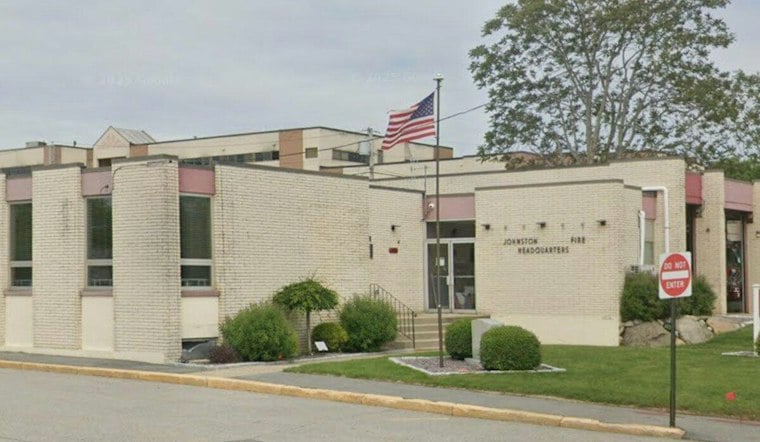
A Johnston firefighter has filed a Rhode Island Superior Court lawsuit against the town, alleging he was retaliated against after reporting that firefighters were using drugs and alcohol while on duty at multiple stations. Fire Chief Keith Calci and Mayor Joseph Polisena Jr. have both publicly denied the allegations, setting up a dispute over whether firefighter Edward Spicer uncovered genuine misconduct or whether his complaint grew out of a disagreement over his use of sick time.
According to the Johnston Sun Rise, Spicer's attorney Vicky Bejma says her client was targeted for retaliation after reporting alcohol and marijuana use at fire stations, and she argues the town violated the Rhode Island Whistleblowers' Protection Act. Bejma has said Spicer's observations included substance abuse, a lack of department discipline, and an incident in which intoxicated women visited a station and played with fire equipment. Spicer joined the Johnston Fire Department in 2024 and, according to the same report, first raised his concerns to Battalion Chief Robert Marshall in September of that year; Marshall reportedly acknowledged there was an issue but took no action.
Bejma has also warned that on-duty firefighters can be summoned to emergencies at any time, operating large fire trucks, ambulances, and other heavy equipment at high speed — a point she has framed as central to why substance use on the job carries heightened risk, per the Sun Rise's reporting. The paper reports that Spicer later observed intoxicated women visiting a station himself.
A Sick-Time Meeting and an Alleged Insult
Tensions escalated, per the same account, when then-Fire Chief David Iannuccilli called Spicer into a meeting in early February to discuss his sick-time use. Spicer has said he used the time because of a family illness and that his usage fell within his contract's parameters. It was around this period, the Sun Rise reports, that Marshall called Spicer a “rat” in front of other personnel.
That remark drew internal discipline. As reported by Firehouse, Johnston Fire Department Battalion Chief Robert Marshall was disciplined internally after the comment, and new Fire Chief Keith Calci has publicly stated he does not condone what Marshall said. Calci assumed command after Iannuccilli's retirement; Firehouse reports Calci had served with the department for 30 years across multiple positions and stations before his appointment.
Pre-Suit Letter Preceded Command Shake-Up
Firehouse's reporting lays out an administrative timeline that predates the court filing. In June, attorneys representing Spicer sent a pre-suit warning letter to the Town of Johnston alleging that nearly one-third of the fire department engaged in on-duty drug and alcohol abuse, specifically citing the incident involving intoxicated women at a station. Following that letter, the outlet reports, Mayor Polisena asked Iannuccilli to retire earlier than planned and disciplined a firefighter for permitting unauthorized women into the station. The lawsuit itself, filed in late September, alleges that Iannuccilli retaliated by revealing Spicer's identity as the whistleblower to department command staff.
Town Officials Push Back Hard
Calci has said the allegations are false, telling the Sun Rise the department would have taken disciplinary action had the alleged conduct occurred, and that he has not seen and does not expect to see the behavior described. He said a member with a substance-abuse problem would receive help, and reported that the department has received no complaints of members being intoxicated or under the influence. The Johnston Fire Department responded to almost 9,000 calls and transported patients to hospitals during the period in question, per the Sun Rise, completing roughly 8,500 runs in a calendar year — about 23 runs a day, or nearly one every hour.
Retired Colonel Steven O'Donnell, a former superintendent of the Rhode Island State Police, reviewed the complaint, according to the same report. Polisena called the allegations totally false and argued that if 25 to 30 firefighters were abusing alcohol and marijuana, complaints would have surfaced from medical professionals; the town says it received no complaint from a doctor, nurse, CNA, or other medical professional at Rhode Island hospitals. The mayor also said Spicer spent most of his time in the dispatch room, accused him of being upset over being challenged about sick-time use, and said no action was taken to terminate him. Polisena described Spicer's grievance as concerning sick time and called the complaint vague, saying it barely passed the pleadings threshold.
What Rhode Island Law Allows — and Restricts
The legal fight unfolds against a specific statutory backdrop. Under the Rhode Island Whistleblowers' Protection Act, R.I. Gen. Laws § 28-50-1 et seq., employers are barred from discharging or retaliating against employees who report suspected legal violations to supervisors or public authorities, and the law gives plaintiffs a three-year window to pursue damages and reinstatement in Superior Court, according to the Rhode Island Department of Labor and Training.
Separately, Rhode Island General Laws § 28-6.5-1 generally prohibits employers from subjecting current non-DOT employees to random drug testing, instead requiring documented, contemporaneous observations of impaired job performance before a mandatory test can be ordered, per FindLaw. The same statute mandates that an employer who conducts a valid test and receives a first-time positive result must offer a referral to a licensed substance abuse professional rather than moving straight to termination — context that helps explain why town officials could not simply order blanket drug screens across the department in response to the allegations.
Department Size and Statewide Context
The Johnston Fire Department is represented by Local 1950 of the International Association of Fire Fighters, which covers 95 career members operating out of four stations across 24.4 square miles, according to Johnston Association of Fire Fighters Local 1950. A report released in August by WPRI found that Rhode Island maintains nearly twice as many firefighters per capita as the national average and spends more per resident on fire protection than any other state in the nation, underscoring the scale of municipal fire services at stake in disputes like this one across the state.
The case now heads toward Rhode Island Superior Court, where the competing narratives — a whistleblower alleging systemic impairment on duty versus town leaders describing a personnel dispute over attendance — will be tested. Whether documentary or physical evidence exists to support claims that nearly a third of the department was impaired on duty remains an open question that the litigation will need to address.




