

























































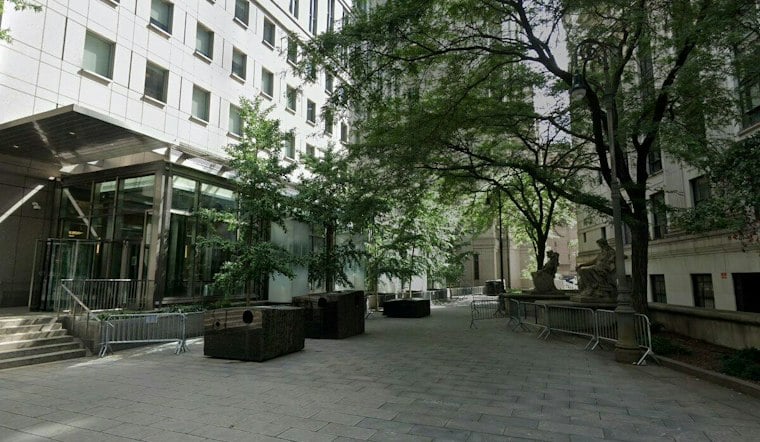
A federal judge has permanently barred U.S. Immigration and Customs Enforcement from arresting immigrants in or near immigration courthouses anywhere in the country, ruling that the practice was unlawful and effective immediately. U.S. District Judge P. Kevin Castel found that the Trump administration's policy authorizing those arrests was invalid, delivering a decisive win to migrant-rights groups who sued after agents began detaining people as they walked out of hearings.
From a Temporary Stay to a Nationwide Ban
Castel's ruling, detailed in a 36-page order, grants summary judgment to the plaintiffs and extends a temporary judicial stay he issued in May into a permanent, nationwide bar, according to Courthouse News. The judge vacated the administration's 2025 courthouse arrest policy outright rather than simply blocking its enforcement, writing that he finds the practice was wholly arbitrary and capricious under the Administrative Procedure Act. As the ACLU put it, ICE officers cannot conduct civil immigration enforcement actions in or near immigration courthouses, except under limited circumstances, and the order affirms and expands an earlier stay to apply nationwide, effective immediately.
The case traces back to a lawsuit originally filed on behalf of African Communities Together and The Door on August 1, 2025, per the same ACLU release. Those groups argued that courthouse arrests violate due process rights, deter immigrants from attending mandatory hearings, and disrupt court processes and the administration of justice. Since President Trump took office in January 2025, ICE agents have descended on immigration courthouses, including 26 Federal Plaza in Manhattan, arresting immigrants as they walked out of hearings, according to Newsday.
Masked Agents in Courthouse Hallways
Masked federal agents apprehended people outside mandatory immigration court appearances at 26 Federal Plaza on Aug. 5, 2025, the Courthouse News account notes. Amy Belsher, one of the attorneys involved in the case, said masked and often armed ICE officers ambushed noncitizens in courthouse hallways and used mass arrests, according to Gothamist. Belsher called the ruling an enormous win for every noncitizen seeking to attend immigration court proceedings safely, the outlet reported.
Castel wrote that ICE offered no explanation for allowing unfettered discretion by its officers, with no guidance governing when or how courthouse arrests could occur, Gothamist reported. That stood in contrast to the prior Biden administration policy, which allowed courthouse arrests only in exceptional circumstances such as a public safety or national security threat or an imminent risk of violence. Federal officials had previously justified the broader arrest practice as a safer and more controlled alternative to arrests made on the street, according to the earlier statements cited in Gothamist's reporting.
A Legal Fight Over a Mistaken Memo
Part of what undercut the government's position was an admission from its own attorneys. Federal government attorneys revealed that an ICE memo from May 2025 did not actually apply to immigration courthouses, intending to correct what they described as a material mistaken statement of fact made to the court and plaintiffs, per Gothamist's reporting. The ACLU's release similarly states the government admitted the memo it had relied on does not and has never authorized any immigration courthouse arrests.
Castel also had to navigate a tricky procedural question. A 2025 Supreme Court ruling held that district courts lack authority to issue nationwide injunctions, and the judge acknowledged that vacating a federal agency action could raise the same concerns as a nationwide injunction. But Second Circuit precedent required him to follow controlling precedent for federal agency violations of administrative procedures, and federal law authorizes judges to vacate unlawful agency actions rather than merely provide injunctive relief, according to Gothamist's account of the ruling. Wednesday's decision, combined with the May stay, reverses an earlier Castel ruling that had allowed courthouse arrests to continue.
Enforcement Gaps and a Summer Surge
Even after Castel's initial block, arrests at Manhattan immigration courts slowed significantly but did not stop completely, the government told the court, per the Courthouse News report. In at least one case, the agency made an arrest and released the detainee within 24 hours, the same report states. During the summer of 2025, double-digit arrests occurred on some days at the 12th and 14th floors of 26 Federal Plaza, according to amNewYork.
The courthouse fight unfolded against a backdrop of record ICE activity nationwide. ICE arrests reached historic highs over the summer, with 43,000 in June, more than 49,000 in July and nearly 51,000 in August, according to The New York Times. Agents carried out operations at hospitals, airports, suburban schools, rural construction sites and truck stops across the country, and in Texas and Florida the agency amplified its reach through partnerships with sheriffs and state highway patrol officers, the Times reported.
Castel's ruling follows a similar decision in Pablo Sequen v. Albarran, which also struck down the administration's policy of arresting immigrants at courthouses nationwide, according to the ACLU. A Department of Homeland Security spokesperson did not immediately respond to a request for comment, Courthouse News reported.





