

























































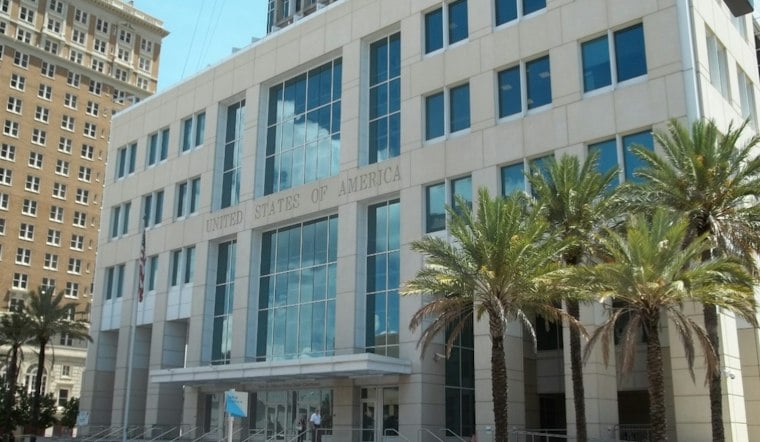
A federal jury in Tampa has ordered air taxi maker Joby Aero to pay nearly $116.9 million after finding the company breached a confidentiality agreement with Florida-based Aerosonic and misappropriated trade secrets tied to critical flight sensors. The verdict, delivered Friday, October 2, lands squarely at a moment when Joby is racing toward final federal certification for its electric vertical takeoff and landing aircraft.
The jury found Joby owes more than $68 million for breaching the companies' non-disclosure agreement and more than $48 million for willfully misappropriating trade secrets tied to Aerosonic's air data probes, according to Reuters. A breakdown of the award shows the panel calculated $68,626,042 for the contract breach, $29,910,416 in compensatory damages under the Defend Trade Secrets Act, and $18,325,634 in exemplary damages for conduct it deemed willful and malicious, according to CaseMine. Jurors also rejected a countersuit Joby filed against Aerosonic alleging the supplier sold it defective probes.
How the Dispute Began
Aerosonic sued Joby in 2025, alleging the air taxi company stole its trade secrets after Aerosonic sold Joby air data probes and the two companies discussed supplying additional sensors for Joby's eVTOL aircraft. Joby denied the allegations. The case, Aerosonic LLC v. Joby Aero Inc., was filed in the U.S. District Court for the Middle District of Florida under case number 8:25-cv-00554, with Aerosonic represented by Todd Tucker of Calfee, Halter & Griswold and Joby represented by Naveen Modi of Paul Hastings.
A Joby spokesperson said the company strongly disagrees with the verdict and intends to pursue available post-trial and appellate remedies, the same Reuters report notes. Aerosonic is based in Clearwater, Florida, while Joby is headquartered in Santa Cruz, California. Aerosonic itself is a wholly owned subsidiary of aerospace components giant TransDigm Group Incorporated, which acquired the avionics firm in June 2013 for roughly $39.8 million in cash, according to SEC filings.
Rival Archer Aviation Pulled Into the Fray
The courtroom battle rippled beyond the two named parties. Direct rival Archer Aviation intervened as a non-party in the Florida case in March 2026 to secure a protective order, after discovery revealed that Aerosonic also sold air data probes to Archer and that Joby had sought engineering drawings of those sensors, per CaseMine's case filings.
The Tampa verdict also arrives just days after a federal judge in Northern California narrowed but allowed to proceed a separate trade-secret lawsuit Joby filed against Archer Aviation, involving a former policy executive and airport leasing data — a case Hoodline covered earlier this month. Taken together, the two cases show Joby fighting on opposite sides of the trade-secret ledger in federal courts on both coasts within the same week.
An Industry Built on IP Fights
Trade secret litigation has become something of a recurring feature in the young eVTOL industry. In August 2023, Archer Aviation settled a two-year intellectual property dispute with Boeing-backed Wisk Aero by issuing warrants and agreeing to integrate Wisk's autonomous flight technology, according to AVweb. The emerging air-taxi market, which includes Joby and rivals backed by major automakers, airlines and investors, has spawned a series of similar trade-secret and patent disputes as competitors race toward commercialization.
Joby has financial cushion to absorb the verdict. The company held approximately $2.3 billion in cash and short-term investments as of mid-2026, bolstered by a manufacturing investment of more than $400 million from Toyota Motor Corporation, according to a filing cited by Stock Titan. Joby also expanded its commercial footprint by purchasing Blade Air Mobility's passenger business for $125 million in August 2025, a unit that generated $36.2 million in passenger revenue in the second quarter of 2026 across traditional helicopter and short-hop flight networks.
Why the Sensors Matter for Certification
The timing raises stakes beyond the dollar figure. Joby entered Stage 5 — the final phase of the Federal Aviation Administration's type certification process for powered-lift aircraft — and began flight testing its first FAA-conforming aircraft under Type Inspection Authorization in March 2026, according to Joby Aviation's own announcement. Air data probes feed pressure and angle-of-attack information directly into flight control computers, making component design rights central to that certification timeline.
The FAA finalized its Powered-Lift Special Federal Aviation Regulation in October 2024, establishing operational and pilot certification rules for electric air taxis as the first new civil aircraft category introduced in the United States since helicopters in the 1940s. Joby has also leaned on federal support for its testing push, having been selected in March 2026 by the White House and U.S. Department of Transportation as an air taxi partner for the national eVTOL Integration Pilot Program, enabling demonstration flights across New York, Texas and California — efforts Hoodline has tracked in prior reporting from Manhattan and Austin.





