

























































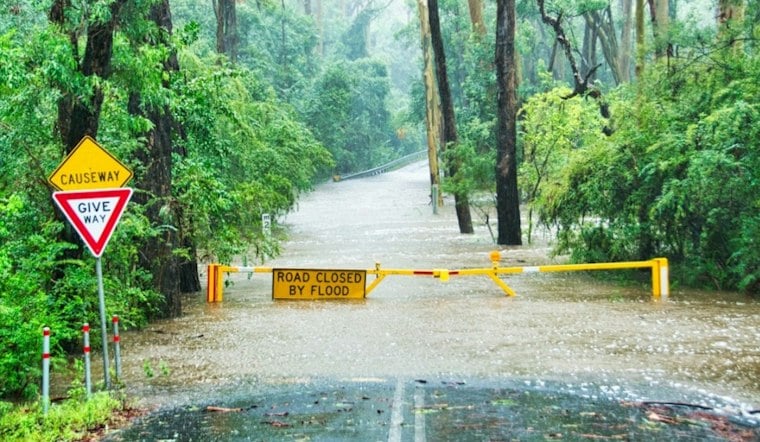
Jennifer Campbell was among the survivors of the July 2022 flood in eastern Kentucky. The disaster underscores a national pattern: millions of American properties sit in flood-prone areas without the coverage that could help them recover, even as federal flood insurance premiums keep climbing.
A Coverage Gap Seven Times the National Average
Nationwide, just 2.4% of properties carry federal flood insurance through 4.5 million policies, even though 8.4% of U.S. properties face severe or extreme flood risk, according to ABC News. In eastern Kentucky, the disparity was starker still: only 2.1% of properties in the areas struck by the 2022 flood were insured, despite nearly 47% of those properties facing severe or extreme flood risk, the outlet reports. That gap of 45 percentage points is more than seven times the national average, per the same report. A separate accounting from the Environmental and Energy Study Institute puts the National Flood Insurance Program's policyholder count at roughly 4.7 million, representing about 96% of the flood insurance market — a discrepancy the two sources don't reconcile.
The eastern Kentucky flood, which struck on July 28, 2022, killed more than 40 people and forced 600 people to be rescued by helicopter, ABC News reports. More than a foot of rain fell during the disaster. In some affected ZIP codes, no more than 5% of properties carried flood insurance despite hundreds or thousands of buildings facing extreme flood risk, according to the outlet's reporting.
Why So Few Homes Were Covered
Part of the problem traces back to FEMA's own flood maps, which determine which properties fall into high-risk areas and trigger mandatory insurance for anyone with a federally backed mortgage. Only 18% of the buildings struck by the 2022 Kentucky flood fell within a high-risk zone, the ABC News report notes — meaning the vast majority of destroyed properties were never required to carry coverage in the first place. Homeowners insurance policies typically exclude flood damage entirely, leaving residents outside mapped high-risk zones with essentially no financial backstop unless they buy a separate policy.
FEMA's housing assistance and other-needs programs are capped at about $40,000 each, and the agency provided nearly $90 million in direct assistance after the 2022 floods — an amount that equaled roughly one-fifth of the lowest estimated rebuilding cost for the region. Bryant Matthews, who did have flood insurance at the time, told reporters his policy paid off what remained on his mortgage. Libby Honeycutt and Ronald Conley were among those who lacked coverage; Conley rescued his dogs by pontoon boat during the flood and only moved back into his home this September, more than four years after the disaster.
Premiums Climbing as Policy Counts Fall
The typical flood insurance policy now costs about $1,100 per year, up roughly 90% over the last five years, according to the same ABC News analysis. Over that same span, the number of federal flood insurance policies nationwide has fallen by roughly 500,000. Much of that shift traces to Risk Rating 2.0, the pricing system the federal government fully implemented a few years ago to align premiums more closely with individual property risk — a change that raised prices for most buyers.
Louisiana resident Dan Charlson dropped his flood insurance in Lake Charles after his premium rose from roughly $900 to $4,000, the outlet's reporting states. Louisiana Sen. Bill Cassidy has said Risk Rating 2.0 put insurance out of reach for too many people. A separate analysis from the Neptune Flood Research Group found that five years into Risk Rating 2.0, 42% of NFIP policyholders — about 1.5 million people — still pay below their full-risk price, representing a subsidy gap of roughly $2.6 billion a year. More than half of NFIP policies are now priced at full risk, up from one-third in December 2022, the analysis found, and the group projects that under the program's statutory 18% annual rate cap, another $10 billion to $13 billion will remain subsidized before the pricing gap closes in the late 2030s. The subsidy is shrinking by about $50 million a month, though 43% of that decline comes from policyholders simply leaving the program rather than being repriced.
That subsidy isn't spread evenly. Florida alone holds 48% of the national NFIP subsidy, about $1.2 billion a year, per the Neptune Flood Research Group analysis. Second homes, rentals and businesses hold 42% of subsidy dollars while making up only 28% of policies, and properties valued at $1 million or more account for at least 17% of the subsidy across just 4% of policies, the same analysis shows.
Mapping and Policy Fixes Remain Unsettled
FEMA's flood maps are commonly out of date, inadequately capture severe flood risk, and inadequately account for inland heavy-rain flooding, the ABC News report states. Modernizing flood maps remains a challenge. A Government Accountability Office assessment has recommended steps to address flood insurance affordability.
A review commissioned by the Trump administration in May found what it described as fundamental flaws in the National Flood Insurance Program, which carries more than $20 billion in debt and was established by Congress in 1968 to offer coverage to participating communities. Affordability and potential reforms remain central issues for the program. Jeffrey Schlegelmilch put it bluntly: no one agrees on how to fix the flood insurance program, according to the reporting.
Flood insurance policies remain available to renters and businesses as well as homeowners, with most homeowner policies covering up to $250,000 in property and $100,000 in belongings, per ABC News. Federal law requires government-sponsored mortgage entities to mandate flood insurance for properties in Special Flood Hazard Areas as a condition of a federally backed mortgage, according to a Congressional Research Service analysis. But as the eastern Kentucky flood demonstrated, that requirement only reaches a fraction of the homes that ultimately flood. The average number of U.S. floods causing at least $1 billion in damage nearly doubled between 1980-2002 and 2003-2025, climbing to 1.26 major floods a year, according to the Environmental and Energy Study Institute — a trend that leaves the mapping and pricing debate with little room to wait.





