

























































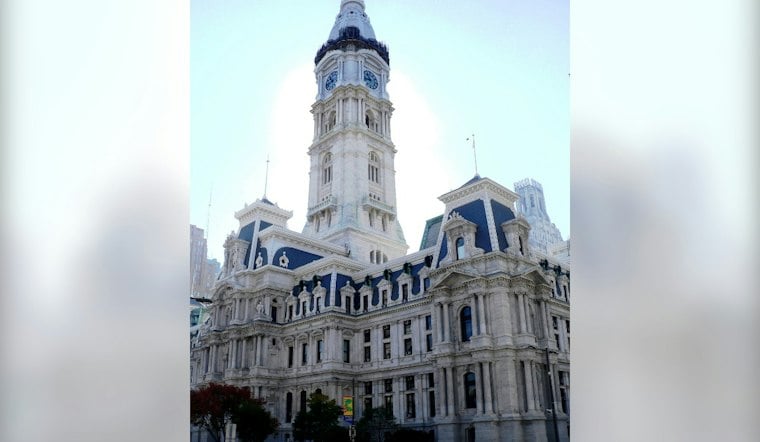
A Philadelphia bill meant to soften the blow of a major business tax change has sat stalled in City Council's Finance Committee for months, even though a majority of Council members reportedly back it. The measure, introduced by Councilmember Mike Driscoll, would exempt sole proprietors and single-member LLCs from the city's Business Income and Receipts Tax. Council President Kenyatta Johnson has kept it from moving forward.
Driscoll, who represents parts of Northeast Philadelphia, introduced the proposal, Bill No. 251026, in November 2025. According to the Inquirer, the bill would exempt sole proprietors and single-member limited liability corporations from BIRT altogether, sidestepping the uniformity concerns that doomed the city's prior tax break. The bill remains pending in the Committee on Finance, which is chaired by Majority Leader Katherine Gilmore Richardson, who supports Driscoll's proposal, per the same report.
How the Old $100,000 Exemption Disappeared
The backstory traces to a legal fight. Zoll Medical Corp., a Massachusetts-based company, sued the city over a BIRT exemption that had excluded the first $100,000 of firm revenue from taxation — effectively eliminating the tax altogether for businesses making less than that amount. The city's Law Department determined Philadelphia would likely lose that court battle, concluding Pennsylvania courts would probably find the old exemption violated the state constitution's Uniformity Clause, the Inquirer reports.
Mayor Cherelle L. Parker moved to end the exemption as a result, and Council members grudgingly eliminated it in June 2025, according to the newspaper's account. The city's Department of Revenue separately described the shift as creating “a significant shift in tax obligations for many small businesses” as it worked to ease the transition, per a notice from the Department of Revenue. The agency had earlier said the old exemption would no longer be available starting with 2025 tax filings submitted in 2026, according to a separate city notice.
Tens of Thousands of Businesses Newly on the Hook
The fallout has been widespread. The elimination of the $100,000 exemption has subjected tens of thousands of small businesses to BIRT for the first time in years, the Inquirer reports, and the city estimates 75,000 small-business owners may owe the tax for the first time, according to a separate Inquirer report on vendors, gig workers, and therapists pushing back on the change. BIRT itself is Philadelphia's third-largest local tax, bringing in about $779 million last fiscal year, with firms paying 5.71% of net income earned in the city plus 0.141% of gross receipts.
The numbers tell a similar story over time. BIRT payments totaled $680 million in 2024 and rose to $752 million in 2025 once the exemption ended, according to Billy Penn, with the city's Finance Department projecting revenue would reach $779 million in 2026 and $806 million in 2027. The administration had projected the exemption's elimination alone would generate about $30 million in additional city revenue annually. Parker and Council also allocated $38.5 million in 2025 for programs to help small firms comply with the new tax obligations, a figure Billy Penn separately reported the administration budgets annually for expanded business assistance.
A Narrower Fix Meant to Survive Legal Scrutiny
Driscoll's bill takes a different approach than the old blanket exemption. Rather than exempting a slice of revenue for every business, it would shield entire classes of firms — sole proprietors and single-member LLCs — from BIRT altogether, with qualifying one-person businesses exempt on all of their earnings, not just the first $100,000, according to Billy Penn's reporting. The bill would not protect all small businesses, including partnerships and multi-member LLCs, per Technical.ly. If enacted, the legislation would take effect July 1 and apply to the following year's tax season, according to WHYY.
The city's Department of Revenue has flagged a risk with that structure: businesses may change their structure specifically to take advantage of the exemption, which could increase revenue losses beyond current estimates, the Inquirer reports. The administration's own analysis estimates Driscoll's bill would cost the city about $29.5 million per year.
Behind the Holdup
Jigar Mehta, who championed the idea behind Driscoll's legislation, said Johnson's staff helped draft the bill and that he was told the council president supported it, according to the Inquirer's reporting. Driscoll, for his part, said Johnson was not interested in moving bills that could risk revenue generation and was instead concentrating on ways to increase revenue. Driscoll added that opposing help for small businesses sends the wrong message.
Johnson, who supports small businesses according to the same report, said Council is reviewing all tax relief proposals as part of a larger conversation regarding the Fiscal Year 2028 operating budget, revenues, and fiscal priorities. That framing leaves Driscoll's bill in limbo for now, even as Council as a body is described as supportive of the small-business relief measure. Separately, Parker has also proposed a bill to gradually reduce BIRT rates over 13 years, part of a broader push around the tax that Council approved cuts to in June 2025.



