

























































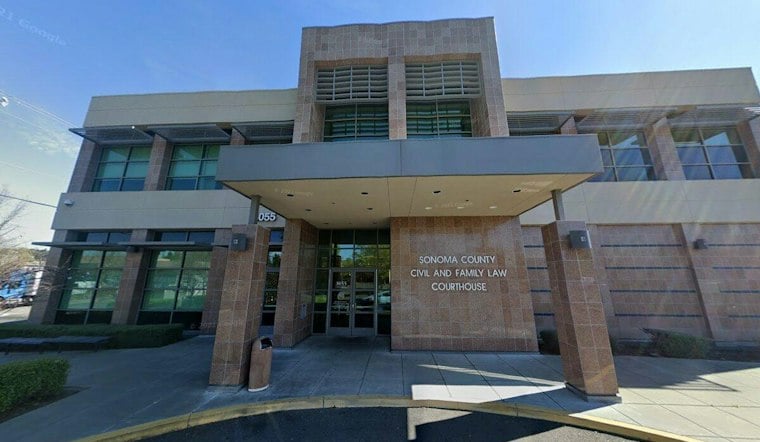
A former Cal Fire firefighter from Rohnert Park says he was pushed out of his job after asking to keep facial hair required by his Orthodox Christian faith, and he's now suing the agency over it. Kynan Barrios, who held the rank of Firefighter I, filed his complaint in Sonoma County Superior Court on August 19, alleging religious discrimination, retaliation and failure to accommodate his religious practices.
According to The Press Democrat, Barrios served with Cal Fire's Sonoma-Lake-Napa unit during the 2021-2024 fire seasons, earning between $71,462 and $98,883 in annual pay and benefits, per Transparency California figures cited in the report. He first requested a religious accommodation from the agency's facial-hair grooming policy on April 19, 2024, saying it conflicted with his Orthodox Christian grooming practices.
Cal Fire's grooming policy requires facial hair that does not obstruct breathing masks, limiting mustaches to no lower than the bottom of the upper lip and no more than a half-inch beyond the corner of the mouth, the station's report notes. Barrios contends in his complaint that Cal Fire rejected his request by citing safety and respiratory-protection concerns rather than evaluating his individual circumstances — even though he says he passed a self-contained breathing apparatus fit test while wearing facial hair in April 2024.
Warning Arrived Days After the Request
Barrios alleges that just five days after he made his initial accommodation request, Cal Fire issued him a written warning. He then submitted a formal written religious accommodation request five days after receiving that warning, which Cal Fire denied on May 15, 2024, per the same account.
His complaint alleges that warnings, counseling and criticism escalated more aggressively after he sought the accommodation. It describes a Cal Fire supervisor reprimanding him, threatening him with discipline, and accusing him of tearing apart the crew. Barrios also contends in his complaint that at least four other Cal Fire firefighters had facial hair that did not meet standards without facing discipline.
Cal Fire terminated Barrios on October 10, 2024, citing safety, readiness, performance, interpersonal, insubordination and operational misconduct as reasons for the dismissal, the outlet reports. The following March, Cal Fire issued a bulletin advising personnel to restrict or escort Barrios if he appeared on agency property, according to the report.
Allegations of Lasting Harm
Barrios' complaint alleges religious discrimination, retaliation, failure to reasonably accommodate his religious creed and failure to prevent discrimination. It also alleges emotional distress, anxiety, humiliation, loss of professional standing and disruption to his firefighting career. As of August 2026, Barrios was working as a security guard, the newspaper reports.
Cal Fire spokesperson Jason Clay told the paper the agency cannot comment on pending litigation. A case management conference is scheduled for February 9 before Sonoma County Judge Dana Simonds, according to the report.
How Facial-Hair Rules Collide With Religious Accommodation Law
The dispute touches on a broader legal question that has surfaced in other agencies: whether safety-driven grooming policies leave room for individualized religious accommodation. Under California Government Code section 12940, religious discrimination in employment is unlawful unless an exception, such as a bona fide occupational qualification, applies, according to California Legislative Information. The federal Equal Employment Opportunity Commission similarly lists facial-hair accommodations as a possible example of religious accommodation in the workplace, noting that employers can decline only when the burden amounts to an undue hardship, per the U.S. Equal Employment Opportunity Commission.
Safety standards themselves leave some room for interpretation. Both National Fire Protection Association standards and Occupational Safety and Health Administration standards emphasize that facial hair cannot interfere with the seal of self-contained breathing apparatus masks, but OSHA guidance adds that facial hair is allowed as long as it does not protrude under the respirator seal or extend far enough to interfere with the device's valve function, according to the Occupational Safety and Health Administration. Separate OSHA guidance states that firefighters entering an immediately dangerous to life or health atmosphere must wear a self-contained breathing apparatus.
Similar fights have played out elsewhere. In a case analyzed by law firm Cozen O'Connor, the Third Circuit ruled on May 30, 2025, in favor of Atlantic City firefighter Alexander Smith, whose religious beliefs required him to grow a beard and whose exemption request had been denied over active-duty concerns. The court found the city's clean-shaven policy wasn't applied consistently, since administrative staff could avoid SCBA fit testing and captains could override safety rules, which undermined the policy's general applicability. The analysis notes that courts may weigh the combined effect of multiple overlapping policies rather than just the one directly at issue.
In another comparison, the U.S. Justice Department filed a complaint against the California Department of Corrections and Rehabilitation, alleging its facial-hair ban amounted to religion-based employment discrimination, according to Courthouse News Service. That report says eight corrections employees sought religious accommodations to wear beards but were denied or never received a reply, after the department changed its respirator policy in September 2022 to forbid any facial hair interfering with a respirator seal. The Justice Department argued the agency hadn't evaluated whether a tight-fitting respirator was actually necessary for every job.



