

























































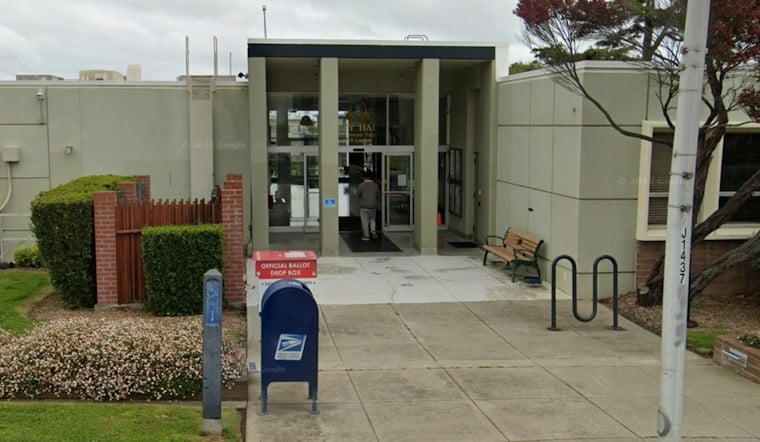
San Bruno voters will decide this November whether to overhaul how the city taxes businesses, with officials saying the change could pull in an extra $4.2 million a year for police dispatch, street repairs and parks upkeep. Measure EE would replace the city's current business license structure with a tiered system based on gross receipts, charging different rates per $1,000 of income depending on the type of business.
The push comes after a tax analysis presented to the San Bruno City Council in June 2026 by municipal consultant HdL Companies found that the city's existing business license model was regressive, according to Citizen Portal. That study found larger, higher-revenue firms were effectively paying a lower tax rate than smaller local businesses, which is why city officials now describe Measure EE as a fix for what San Bruno City Councilmember Tom Hamilton and others have framed as an inequitable system. Under the proposal, the tax would carry a $75 base fee for all businesses operating in the city, plus a variable rate per $1,000 of gross receipts above $75,000, tailored by sector, per Ballotpedia.
Council Softened the Measure After Pushback
Details of the Proposed Measure The ballot language voters will see wasn't the council's first draft. The proposed tax rate on rental properties is $3.00 per $1,000 in gross receipts, while the $1.50 rate applies to services. Room rentals from a primary residence and accessory dwelling units would be exempt. Hoodline's earlier coverage previewed the council meeting, which included discussion of the Crestmoor Fields overhaul, sewer charges and possible ballot measures.
Nonprofit housing organization HIP Housing had submitted formal comments to the council in July 2026 warning that taxing room rentals would discourage home-sharing arrangements. The group noted that 91% of home-sharing hosts in San Bruno are low-income and 75% are seniors, a detail that appears to have shaped the council's eventual carve-outs for ADUs and owner-occupied properties.
A City Facing a Steep Budget Gap
The proposed tax overhaul arrives as San Bruno confronts serious financial strain. City officials reported in April 2026 that an updated five-year financial forecast showed up to $22 million annually in at-risk municipal revenue, nearly a third of the city's General Fund, tied to state-level funding disputes and reallocations, according to the City of San Bruno. Those pressures stem largely from uncertainty over Vehicle License Fee backfills from the state.
The fiscal strain has already translated into job losses. San Bruno eliminated eight municipal positions in 2026, including one police officer, and warned in August that eight more positions could be cut if revenues aren't restored, per San Mateo County's Fair Funding effort. If Measure EE passes, city officials say the resulting revenue would help fund essential services including 911 response, street repairs, and parks maintenance, according to San Mateo Daily Journal.
There is some relief in sight at the state level, though not immediate. In late August 2026, the California Legislature passed Assembly Bill 184, a budget trailer bill directing state finance officials to work with San Mateo, Mono, and Alpine counties on a long-term fix for Vehicle License Fee shortfalls starting in fiscal year 2027-28. That timeline means San Bruno would still need to weather the current budget gap before any state-level solution takes effect.
One of Several Measures on San Bruno's Ballot
Measure EE won't be the only decision facing San Bruno voters in November. The same ballot includes Measure S, which would repeal a 1977 local initiative restricting building height and residential density, and Measure DD, which would ban “safe and sane” fireworks, according to Local News Matters.
San Bruno isn't alone in turning to business tax reform to shore up municipal finances. Neighboring cities including Brisbane, Albany, Emeryville and Newark have also placed business license tax overhauls on their November ballots, part of a broader regional trend as Bay Area cities modernize gross-receipts tax structures amid budget pressures. San Bruno's proposal comes amid that broader regional trend.


