

























































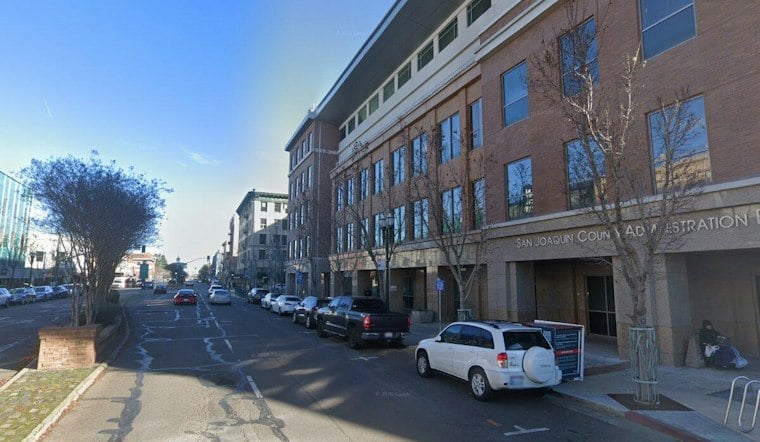
San Joaquin County supervisors voted unanimously this week to freeze new approvals for data centers in unincorporated areas, imposing a 45-day pause while staff study how the power-hungry, water-thirsty facilities could reshape the region before a single project has even applied to build one.
The Board of Supervisors voted 5-0 Tuesday to adopt an urgency ordinance establishing the moratorium, according to Stocktonia. The pause blocks a wide range of land-use approvals tied to qualifying data centers, including general plan or zoning amendments, use permits, variances, parcel and final maps, and building or grading permits, the outlet reported. Smaller-scale data infrastructure used by hospitals, schools, individual businesses, telecommunications providers, government emergency communications and public utilities is exempt from the freeze.
What makes the move notable is that there is currently nothing to stop. The county itself confirmed in a September 2 announcement that there are no active applications for data centers and none operating in unincorporated San Joaquin County. The county's Community Development Code does not even define what a data center is, according to the Lodi News-Sentinel, which means officials wanted the regulatory framework ready before developers come knocking rather than scrambling after the fact.
Why Supervisors Moved Before a Project Showed Up
Board Chair and District Three Supervisor Sonny Dhaliwal said getting ahead of the issue matters because of how these facilities can ripple through daily life for residents. In the county's own announcement, he said it was “critical to get our community's input” given data centers' potential effects on quality of life. County staff identified a list of issues for the six-month study, including strains on the electrical grid, higher electricity costs, groundwater demands, emergency response capacity, heat, noise, vibration and the use of diesel generators, per Stocktonia's reporting.
Officials are examining how the rapidly growing industry could affect electricity, groundwater, agriculture and surrounding communities, the same report noted. Staff plans to return to the board within six months with a broader report covering environmental, fiscal, public safety and public health impacts, along with policy options for regulating the facilities going forward.
A Statewide Scramble Over Water and Power
San Joaquin County's pause lands amid a wider reckoning playing out across California's Central Valley and beyond. The Tulare County Board of Supervisors adopted its own 45-day moratorium on data-center development in unincorporated areas in August, with a possible extension of up to a year, according to the Fresno Bee. Fresno's City Council went further, voting to begin amending its municipal code to prohibit AI and cloud data centers for a full decade.
Nearby, the Patterson City Council voted to extend its own 45-day moratorium to a full year, running through July 2027, the Modesto Bee reported. Imperial County supervisors approved a similar 45-day halt on new and pending data-center permits over worries about water use, air pollution and infrastructure strain, as detailed by Politico, which has described the statewide data-center boom as running into a genuine water backlash in stressed regions.
Cities Choosing Different Paths
Not every jurisdiction is reaching for an outright pause. San Francisco and Oakland both approved 45-day moratoriums on new data centers within city limits, with the option to extend them up to two years or make them permanent, according to the San Francisco Chronicle.
Closer to San Joaquin County, Stockton's City Council voted 7-0 to strip data centers from its three-year economic development plan, though that action stopped short of banning new facilities or imposing a moratorium, per Stocktonia's reporting. The debate isn't confined to the Central Valley, either.
The Numbers Driving the Fight
The stakes behind these local votes are tied to a statewide electricity picture that is shifting quickly. California had more than 200 active data centers accounting for roughly 1,000 megawatts, or about 2% of peak demand on the state's grid, in early 2026, Stocktonia reported. The California Energy Commission projects that figure could balloon to about 4,500 megawatts, or 9% of peak demand, by 2040.
County staff have identified groundwater demands and diesel-generator use as issues for the study.



