

























































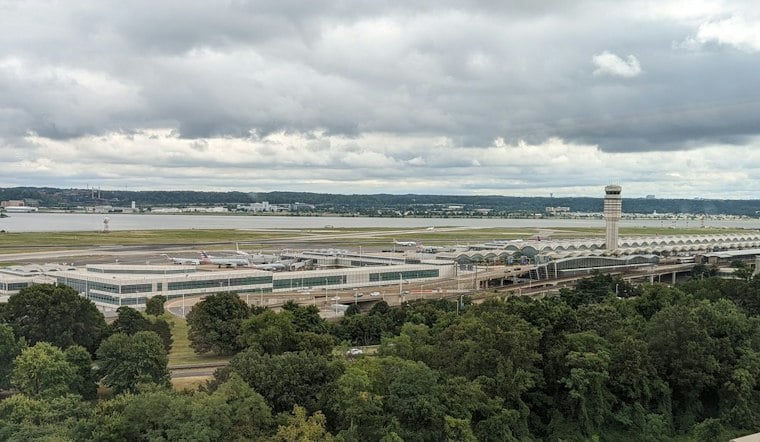
Sen. Eric Schmitt introduced legislation last week that would steer $30 billion into the next phase of upgrading America's air traffic control system, targeting the aging towers, telecommunications lines and airport infrastructure that have been blamed for a surge in flight delays. The Missouri Republican's Modern Skies Act, introduced Sept. 28, would split the money three ways: $10 billion for tower replacement and ground facilities, $10 billion for telecommunications upgrades and digitizing analog systems, and another $10 billion for general airport infrastructure and software expansion.
According to AOPA, the bill would also give the Federal Aviation Administration authority to move funds from the original $12.5 billion “down payment” that Congress approved for the project, allowing the agency to deploy additional air-traffic-control equipment sooner. That earlier $12.5 billion, provided last year, was the first installment in what officials now describe as a multi-phase overhaul, as reported by the Washington Examiner.
Transportation Secretary Sean Duffy and FAA Administrator Bryan Bedford joined Schmitt at Ronald Reagan Washington National Airport to announce the bill, per the same outlet's report. The Transportation Department and FAA say the $30 billion project is meant to finish modernizing the national air traffic control system and, in turn, address the flight delays and cancellations that have frustrated travelers.
Why Lawmakers Say the System Can't Wait
The push for more funding follows a rough stretch for American air travel. One in 12 flights was delayed more than an hour in 2025, the worst on-time performance in more than a decade, the Washington Examiner reported. Separately, the Washington Times reported that recent telecommunications failures, including a cut fiber-optic cable, triggered ground stops and delayed more than 9,500 flights across the Northeast.
The FAA has already launched more than 10,000 infrastructure projects nationwide under the modernization push, replacing radar, software, hardware and telecommunications equipment, the Washington Examiner noted. More than 60% of the nation's legacy copper telecommunications lines have reportedly been swapped out for fiber-optic and wireless infrastructure as part of that effort.
A Phased Overhaul With a 2028 Target
Officials say the first phase of modernization has come in on time and under budget, with the entire effort still expected to wrap by the end of 2028, according to AOPA's reporting. The Washington Times reported that the bill would appropriate $10.1 billion in the next fiscal year specifically for air traffic control, broken down into $300 million to consolidate terminal facilities, $600 million for flow-management technology, $2 billion for cloud and telecom infrastructure, and $7.2 billion for a shared automation platform and controller workstations.
Older federal assessments underscore why supporters say the investment is overdue. A Government Accountability Office review found that FAA modernization investments are not planned for completion for at least six years, and in some cases not for 10 to 13 years. A separate GAO report found that air traffic control facilities, the bulk of FAA-maintained sites, carry a maintenance backlog of about $259 million, warning that deferred maintenance could compromise safe airspace operations.
St. Louis Has Seen This Story Before
As STLtoday.com columnist Joe Holleman noted, St. Louis has its own history with aging air traffic infrastructure. Lambert International's old control tower, closed for several years, was finally brought down by a wrecking ball on July 28, 2005, with Ahrens Wrecking spraying water on the structure to keep dust down as photographer J.B. Forbes captured the demolition for the St. Louis Post-Dispatch.
Whether Lambert or any specific airport would see funding under the new Modern Skies Act hasn't been detailed, and the bill's path through Congress remains to be seen. For now, the legislation stands as a proposal, with its fate tied to whatever appropriations debate follows its introduction in the Senate.





