

























































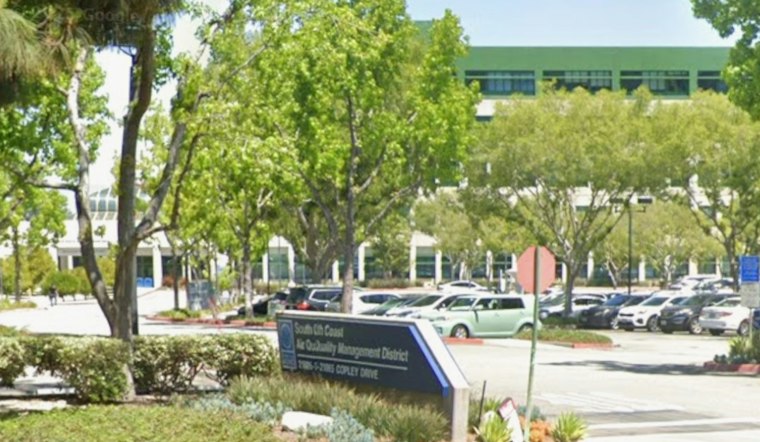
South Coast AQMD's governing board approved $60.2 million in additional funding for its GO ZERO incentive program on Friday, extending a rebate effort that has already helped more than 3,000 single-family homes and 700 multifamily units swap gas furnaces and water heaters for zero-emission heat pumps. The expansion comes after the original pilot program burned through its funding in a matter of months, a sign of just how much pent-up demand exists for electrifying Southern California homes.
The vote, detailed in a release carried by Morningstar, came as environmental advocates and the Sierra Club organized a clean air rally outside South Coast AQMD headquarters in Diamond Bar during Friday's board meeting. According to the Sierra Club, the $60.2 million expansion could replace between 36,000 and 40,000 polluting appliances across the region, a projection meant to underscore the program's reach beyond the thousands of installations already completed.
South Coast AQMD Governing Board Chair Michael A. Cacciotti said the pilot's rapid uptake sent a clear message. GO ZERO has shown, he said, that communities are eager to move away from polluting gas appliances when affordability improves. That affordability gap is exactly what the new funding round is designed to close, with the board directing $20 million each toward single-family and multifamily rebate categories, plus a flexible $20 million pool that can shift toward whichever category sees greater demand.
How the Rebates Break Down
Under the expanded program, single-family households will receive rebates ranging from $500 to $1,000 depending on system type and size, while homeowners in designated overburdened communities will qualify for higher rebates of $1,000 to $2,000. Multifamily properties will receive $500 to $1,000 per unit, capped at $300,000 per property. The program will now also allow solar water heating systems to qualify alongside heat pump water heaters, and it will support mini-split and window heat pump units in addition to standard systems.
Notably, at least 75 percent of GO ZERO rebate funding will be prioritized for applicants in overburdened communities, and the program will add updated reservation requirements and limits intended to spread multifamily funding across more properties rather than letting it concentrate in a handful of large developments. Rebates may still be combined with other eligible incentives, and units installed on or after September 4, 2026 are eligible for this second phase of funding.
The original GO ZERO pilot, a $21 million effort that launched in September 2025, offered rebates to single-family homeowners, multifamily property owners, and eligible small businesses. Per the Building Decarbonization Coalition, that pilot's incentives ranged from $1,500 to $3,000 for heat pump HVAC systems and $1,000 to $2,000 for water heaters, paired with free contractor training bootcamps. The pilot's multifamily funding was fully reserved within two weeks of launch, and its single-family funding ran out in less than six months.
Why Rebates, Not Mandates
The reliance on voluntary incentives rather than a binding mandate traces back to a close vote. The South Coast AQMD Governing Board voted 7 to 5 in June 2025 against Proposed Amended Rules 1111 and 1121, which would have established mandatory zero-emission sales standards for residential gas furnaces and water heaters, according to AQMD.gov. Those defeated rules would have required clean appliance sales targets starting at 30 percent in 2027. With that path blocked, incentive programs like GO ZERO became the district's primary electrification tool.
That regulatory gap sits against a statewide backdrop that is already moving toward mandatory change. The California Air Resources Board approved a regulation in September 2022 requiring 100 percent of new residential and commercial space and water heater sales in the state to be zero-emission starting in 2030, as reported by Smart Cities Dive. Building fossil-fuel combustion accounts for roughly 90 percent of building emissions statewide, giving the 2030 deadline added weight for regulators and homeowners alike.
South Coast AQMD is responsible for improving air quality across Los Angeles, Orange, Riverside, and San Bernardino counties, including the Coachella Valley, per AQMD.gov.
Other Rebate Options
GO ZERO's expansion comes as Southern California homeowners weigh other electrification rebate programs.
Homeowners can also stack GO ZERO incentives with municipal utility programs, such as LADWP's heat pump HVAC rebate offering up to $2,500 per ton, according to Elephant Energy. Combining local, state, and utility rebates has become increasingly important for making heat pump conversions financially workable, since upfront equipment and installation costs remain a major barrier for average households.
Free heat-pump and building-electrification training for contractors was scheduled to begin Monday, October 5. Contractor shortages have been flagged as a key bottleneck in scaling home electrification efforts, and the district's training push is meant to expand installation capacity alongside the new funding.
Heat pumps offer an electric alternative to gas systems while providing both heating and cooling.
Applications for the expanded GO ZERO program will be processed while funding lasts, and updated program details, including a portal reopening date, are expected to follow. Eligible small businesses under the program include independently owned operations with 100 or fewer employees, annual gross receipts of $5 million or less, and nonprofits exempt from federal income tax under section 501(c)(3).



