

























































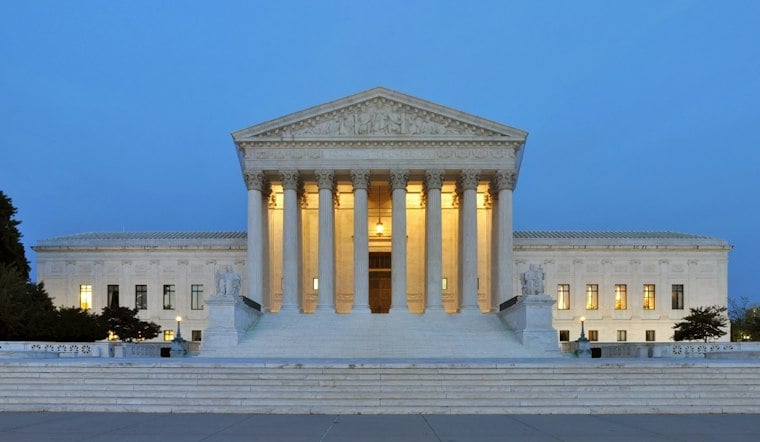
The U.S. Supreme Court on Monday declined to hear Zillow Group's bid to escape a class-action lawsuit accusing the Seattle-based real estate platform of misleading shareholders about its failed home-flipping venture, Zillow Offers. The denial clears the way for the case to head toward a trial scheduled for September 13, 2027.
The high court's refusal leaves intact a Ninth Circuit ruling that upheld a lower court's decision allowing the case to proceed as a class action, according to spokesman.com. A district court judge had granted class certification in August 2024, a ruling the Ninth Circuit affirmed roughly a year later, per realestatenews.com. The proposed class covers investors who bought or acquired Zillow Group Class A or Class C stock between August 5, 2021, and November 2, 2021, according to court records reviewed by courtlistener.com.
At the center of the case is Zillow Offers, the company's home-flipping division, which Zillow shut down permanently in November 2021 after management admitted it could not accurately forecast future home prices, the station's report notes. Investors allege that statements made by Zillow's then-CEO and other company leaders in the months before the shutdown painted an overly positive picture of the business unit, obscuring risks that would soon surface.
What Zillow Disclosed When It Pulled the Plug
Zillow's November 2, 2021 announcement wasn't just about shutting down a business line. The company disclosed that it wrote down $300 million in losses during the previous quarter and announced a layoff of 25% of its workforce, per the same account. A separate report, however, put the inventory write-down at approximately $304 million for the third quarter of 2021, with plans to cut roughly a quarter of its staff, according to mpamag.com.
Zillow's lawyers have denied that the company engaged in securities fraud, arguing instead that it disclosed the risks of entering a new line of business that ultimately did not pan out, the article notes. The Ninth Circuit saw it differently, finding that Zillow's November 2021 disclosures revealed new information about how the company's home-pricing struggles threatened the business and suggested that earlier statements may have obscured how its pricing model had misfired.
A Fight Over How Closely Disclosures Must Match Earlier Claims
Zillow had asked the Supreme Court to resolve what it described as a split among federal appellate courts over how closely a company's later, corrective disclosures must relate to earlier alleged misstatements before a securities case can proceed as a class action. The company argued that so-called back-end disclosures must directly counter the earlier front-end statements to justify certification, according to realestatenews.com. The Ninth Circuit rejected that framing, holding that a disclosure need not precisely mirror the earlier misrepresentation to support a class claim.
The case falls into a category known as price-maintenance litigation, in which plaintiffs allege that a company made misrepresentations specifically to keep its stock price from falling. The U.S. Chamber of Commerce and other pro-business groups weighed in against the Ninth Circuit's approach, warning it would expose American businesses to costly securities class-action lawsuits, per spokesman.com.
What Comes Next
With the Supreme Court's refusal to intervene, the investor case now heads back toward trial, set for September 13, 2027, according to mpamag.com. Court filings reviewed by courtlistener.com show the scale of investor exposure during the proposed class period, noting that more than 478 institutions held or traded Zillow's Class A stock and more than 703 institutions held or traded its Class C stock between August and November 2021.
The underlying lawsuit, filed in 2021, accuses Zillow Group of misleading investors about the Zillow Offers venture before its collapse sent company stock plunging that November. Zillow's legal team continues to deny wrongdoing, maintaining the company's statements reflected the genuine uncertainty of launching a business that ultimately did not work out. Barring a settlement, the dispute is now positioned to play out in front of a jury next year.




