

























































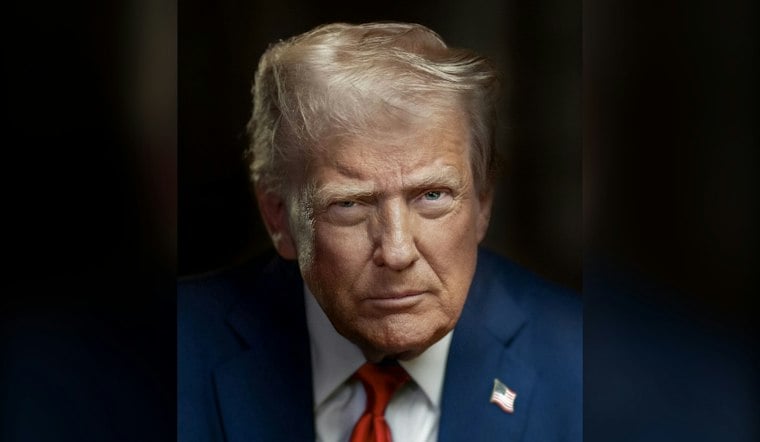
President Donald Trump is expected to unveil a plan directing roughly $54 billion of South Korean investment toward a long-stalled Alaska natural gas export project, timed to a Senate race where Republican incumbent Dan Sullivan is locked in a tight fight against Democrat Mary Peltola. The announcement would tap into South Korea's broader pledge to invest in the United States, but South Korean officials have not confirmed they are ready to commit that money to Alaska specifically.
According to Bloomberg, which first reported the expected announcement, the $54 billion figure is part of South Korea's plan to invest some $200 billion in the U.S. overall, with the Alaska money aimed at the long-stalled venture to export natural gas from the North Slope. The figure would be drawn from South Korea's pledged $350 billion strategic investment package tied to last year's trade agreement, with the $54 billion directed toward Alaska LNG and other U.S. projects, as reported by Investing.com. That 2025 deal also delivered lower U.S. tariffs on South Korean cars, auto parts and other products, per the seed reporting from the Associated Press.
But the deal is far from settled. South Korea has not yet approved the proposed $54 billion investment, the same report notes, and Seoul is still analyzing whether Alaska LNG makes commercial sense. Separately, Reuters has reported that South Korea does not plan to invest in the project at all, though it remains interested in buying energy from it if built — a conflict that underscores how unsettled the financing picture remains even as Trump prepares to tout the number.
What Alaska LNG Would Actually Build
The proposed project centers on an 807-mile pipeline carrying gas from Alaska's North Slope to the Kenai Peninsula, where it would be liquefied for export, according to Alaska Beacon. Glenfarne owns 75% of the project, with the remaining quarter held by the state-owned Alaska Gasline Development Corp. Total costs are estimated between $44.5 billion and $54.5 billion, per Investing.com's explainer on the project.
Alaska LNG has lined up sales agreements covering 13 million metric tons of gas annually but still needs buyers for another 3 million tons a year, the same Investing.com report states. Japan's JERA and Tokyo Gas have signed preliminary agreements to purchase a combined 2 million metric tons a year if the project is built, according to U.S. News. The project would also compete against lower-cost Gulf Coast exports and Canadian ventures chasing the same Asian buyers, Investing.com notes.
Alaska lawmakers are weighing their own piece of the puzzle. The state Senate Finance Committee is considering House Bill 381, which would change how the pipeline is taxed, according to Alaska Beacon. A legislative document from the Alaska State Legislature indicates the bill would replace the existing property tax with a tax on gas shipped through the pipeline. The state would continue collecting production taxes, royalties and other fees. If that tax change becomes law and the project is built as expected, Alaska Beacon reports it could generate almost $800 million annually for the state treasury over 30 years starting in 2033.
A Senate Race Tightening by the Week
The timing lands squarely in the middle of Alaska's most competitive Senate contest in years. Sullivan, a two-term Republican senator, is backing the natural gas project as he faces Peltola, a former congresswoman, in what U.S. News describes as a closely watched race. An AARP poll released Sept. 17 found Peltola leading Sullivan 46% to 41%, with 7% undecided, according to The Hill. An average of four recent polls put the race even tighter, with Peltola at 46.5% and Sullivan at 45.0%, per Sedaily.
Alaska is one of several states, alongside Iowa, where Democrats are targeting Republican-held Senate seats this cycle, with the midterms now less than five weeks away and Democrats needing a net gain of four seats to flip the chamber's 100 members. In Iowa, retiring two-term Republican Sen. Joni Ernst is being replaced on the ballot by Republican Ashley Hinson, who is competing against Democratic state Rep. Josh Turek. That race followed closely on the heels of Trump's own Iowa announcement two days earlier, when he unveiled plans for Mesabi Metallics, a unit of India's Essar Group, to build a $15 billion steel mill in the state, the Korea JoongAng Daily reported.
Fuel Prices and Economic Anxiety Loom Over the Pitch
Trump has repeatedly promoted Alaska LNG as a way to expand U.S. energy exports and deepen ties with allies including South Korea and Japan, and the administration has been pushing broadly to attract investment from allied nations ahead of November. South Korea has already identified a $22.3 billion gas-fired power plant in Encinal, Texas, as the first project under its U.S. investment package, according to the Korea JoongAng Daily.
The political backdrop is uneasy for Republicans heading into the midterms. Voters are concerned about near-record fuel prices tied to the unresolved war with Iran, and fuel prices have also become a concern in Alaska. Nationally, an AP-NORC Center for Public Affairs Research poll conducted in late July found about 7 in 10 Americans described the economy as poor, with only about one-third approving of Trump's handling of it — numbers that help explain why the administration is eager to spotlight foreign investment wins like the Alaska LNG pitch before voters head to the polls.





