

























































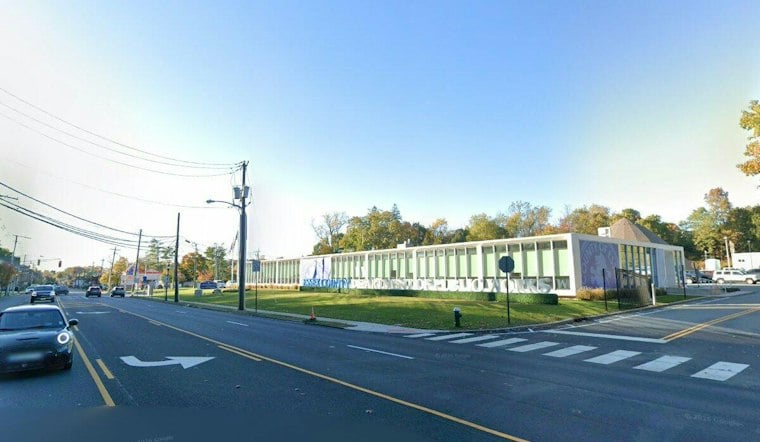
Verona Township Council has approved the creation of a new subcommittee tasked with negotiating how much of the township's PILOT tax-break revenue, if any, should flow to local schools. The move comes as the council has also approved a PILOT agreement for a new 33-unit apartment building by a 4-1 vote, reigniting long-simmering concerns that redevelopment projects add students to classrooms without adding a dime to the school district's tax base.
Under New Jersey's standard PILOT arrangement, developers pay townships instead of paying property taxes, and that revenue primarily goes to municipal governments rather than local school districts, according to NJ.com. Under the state's Long-Term Tax Exemption Law, standard annual service charge payments are split 95% to the municipality and 5% to the county, leaving school districts with zero direct funding unless a town voluntarily agrees otherwise, per the New Jersey Legislature's own framework. Apartment and housing developments can increase school enrollment even as the buildings themselves stay off the tax rolls that fund those same schools, and residents may end up paying higher taxes to cover the gap.
A Subcommittee With a Deadline
The newly formed PILOT Revenue Sharing and Educational Subcommittee will be tasked with negotiating how PILOT revenues might be shared with Verona's schools, with Deputy Mayor Jack McEvoy and Councilman Alex Roman representing the township in talks with school board representatives, the report notes. Verona has said it aims to have a formal revenue-sharing agreement or memorandum of understanding ready for approval before the end of 2026, and the subcommittee is expected to set a meeting schedule during its first session with board representatives.
Township officials have acknowledged that PILOTs are simply a mechanism municipalities can use to address the impacts of development, and that development affects both municipal services and schools alike, the outlet reports. Verona has said it does not plan to replicate any other community's revenue-sharing model exactly, instead noting its approach will reflect the township's own financial circumstances, its relationship with the Board of Education, and community needs. The Verona Board of Education president did not respond to a request for comment from the outlet.
What Other NJ Towns Have Already Done
Verona isn't inventing this fight from scratch. Jersey City's city council passed an ordinance in September 2026 allocating 10% of residential PILOT revenue to a fund for school board capital projects, a move Mayor James Solomon first introduced in June as an Education Infrastructure Capital Fund aimed at aging school facilities, according to Hudson County View. Hoboken took a different route, passing an ordinance that sets aside roughly $500,000 annually from two large apartment developments with PILOT agreements, with the money split between the city's school district and its three charter schools based on enrollment, and the fund growing 2% every year.
Princeton took yet another approach: in May 2025, the Princeton Council and the Princeton Public Schools Board of Education signed a 20-year shared services agreement that gives the school district all remaining revenue from one PILOT agreement tied to the roughly 220-unit Avalon Thanet Circle development, estimated at $300,000 to $500,000 annually, as reported by Patch. Princeton pays debt service on the project's bonds and sends Mercer County its statutory 5% share before any remaining revenue reaches the school board.
A Statewide Push Behind the Local Fight
Verona's deliberations aren't happening in a vacuum. Senate Bill S-1807, sponsored by Senators Troy Singleton and Benjie Wimberly, would set requirements for certain PILOTs and provide for an alternative agreement among the municipality, school district, and entity receiving the PILOT, according to New Jersey Senate Democrats. The bill would require notices to counties, school districts, and the Division of Local Government Services; if the parties pursue an alternative special-project agreement, negotiations would be led by the superintendent or the chief executive of the board of education.
School districts are generally limited to a 2.0% annual increase in their local property tax levies. Because PILOT buildings don't expand the taxable property valuation used to calculate school tax levies, uncompensated student growth from new development can create real budget strain. Verona's own planning records from 2025 and 2026 show multiple active redevelopment areas along Bloomfield Avenue, including the 33-unit project at 383 Bloomfield Avenue and a 28-townhouse project at 885 Bloomfield Avenue.
Local pressure has been building for months. During an August 16 Verona Township Council meeting, residents and former school board members pressed municipal officials to negotiate a PILOT revenue-sharing agreement with the Board of Education before approving any future residential tax abatements, according to Citizen Portal. Residents at that meeting voiced concern that residential developments were increasing student enrollment without expanding the tax base that funds the schools those students attend — concerns that Verona officials appear to be formally responding to with the new subcommittee.



