

























































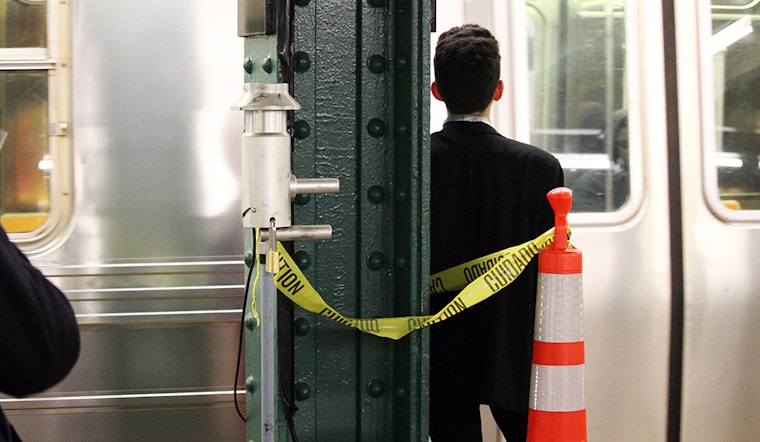
Here’s the machine used to detect gas recently released into the New York City subway system:

The experiment is part of a five year “Air Flow Study” that began in 2012. For five days in May, researchers emitted perfluorocarbon tracer gases at major transportation hubs in order to analyze how vapors travel and settle in tunnels as trains pass by. Detectors, which capture sample particles in bags for study, were also installed outdoors in over 55 stations.
The exercise was designed to imitate the release of a biological agent or gas, like anthrax or mustard gas, in the event of a terrorist attack. The perfluorocarbon tracers, however, were completely harmless and odorless.
According to Donald Bansleben, the program manager of the Chemical and Biological Defense Division of the US Department of Homeland Security, the samples will now take months to analyze.
“There will be a lot of information that is not being made public. I think we do want to be careful with what we do say,” he stated to reporters on a subway platform at Grand Central terminal on Monday, May 9th.
The decision to withhold information is an important precautionary measure as people have been left slightly on edge ever since Sept. 11, 2001.
Still, New Yorkers have continued to demonstrate their resiliency even in the aftermath of such tragedy.
Just last year, a threatening ISIS video was released, singling out some of the busiest spots in the city, including Times Square and Herald Square. The news quickly made headlines, but it did not deter New Yorkers from flooding the streets.
Even in the face of blatant danger, Times Square remained as congested as ever.



