

























































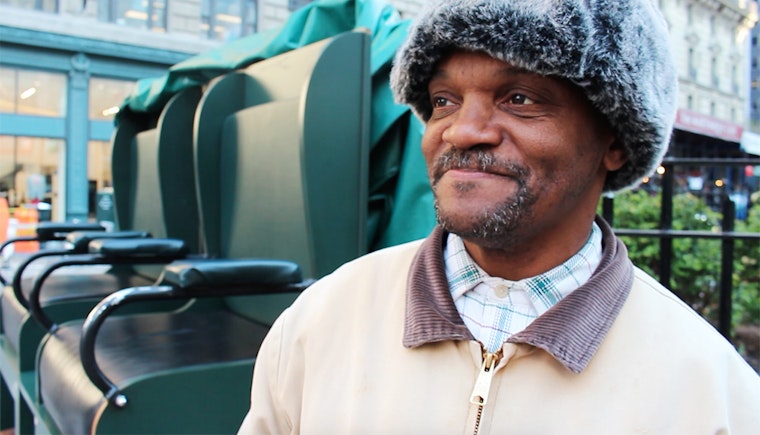
Gary had just finished shining a man’s shoe when I approached to ask if I could take his picture. He was sitting on a metal chair, which he had set up right next to his shoe shine stand outside the entrance gate of Greeley Park. He waited patiently for customers.
“It’s a nice spot,” he said as he smiled and looked around at the surrounding garden.
For the past five years, Gary has worked as a shoe shiner. His two-seater stand is situated in a busy interaction on 32nd Street. It’s painted in a familiar shade of green, much like the other stands found across Midtown Manhattan, particularly in well-trafficked areas, such as Bryant Park and Grand Central Terminal.

Before the rise of these iconic park stands, the city was once filled with makeshift shoeshine concessions, built using office chairs or wooden boxes set up in front of park benches. Because there was no official regulation of such stands, people flocked to the business as it didn’t require a lot of cash and had a low overhead cost. The average price of a tin of polish, for example, is between $6 to $8.
However, in order to combat the rise of makeshift stands, Bryant Park officials decided to install a permanent shoe shine concession over a decade ago, inviting vendors to use it for free. Today, the Greeley Park stand is also owned by the Bryant Park Corporation, and shoe shiners like Gary continue to keep the tradition alive in New York City.
The business itself is modest as most shoeshiners charge $5 to shine shoes and $6 for boots. Although the number of shoe shiners working in Manhattan has significantly dropped since the mid-20th century, a favorite part of the job for many workers is the interaction they have with their customers on a daily basis.
Gary only sees three to four clients a day, but he’s developed a relationship with quite a few:
“Yes! I know some of them,” he beamed. “The regular customers…they come by.”




