

























































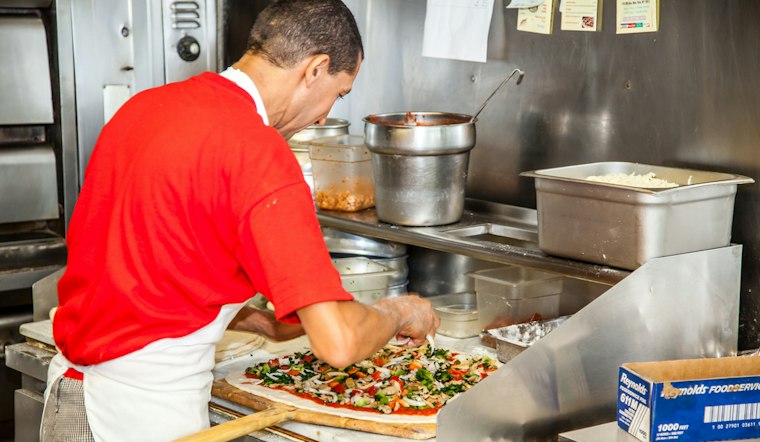
Considering that a single Metrocard swipe costs $2.75, it’s hard to believe that you can afford to purchase pizza by the slice — sometimes for as little as a dollar.
Pizza is so beloved that private and public tours are crafted entirely around its history. After all, as any pizza lover can attest to, nothing really beats the initial sensation of biting down into freshly baked, hand-tossed dough that is topped with a generous helping of melted cheese and tomato sauce.
THE BIRTH AND EVOLUTION OF PIZZA
The story behind New York-style pizza began over a century ago in Little Italy where Gennaro Lombardi, a baker and pizzaiolo from Naples, ran a small grocery store on 53 ½ Spring St. At the time, Antonio Totonno Pero, another Italian immigrant, made tomato pies for the store to sell to workers during lunchtime.
With the widespread success of their pizza, Lombardi eventually acquired a New York State business license to operate the first pizzeria restaurant in the United States. He added chairs and tables, and built a coal-fired oven straight into the store, giving birth to Lombardi’s in 1905.
Although pizza did technically exist in the U.S. before that year, it was only made inside the household kitchens of Italian Americans. As a result, Lombardi is credited with first bringing pizza to the commercial sphere. However, he was forced to adapt his pies to Americans by substituting wood-fire ovens and mozzarella di bufala with coal powered ovens and fior di latte.
Today, over a century after pizza’s humble beginnings, there are plenty of regional variations when it comes to our beloved pies. New York-style pizza, for example, is generally hand-tossed, sold by the slice and characterized by a thin, pliable crust, which can be folded in half to be eaten. Individual preferences can also vary when it comes to toppings and crust.
Still, most people can usually agree on one fact: any pizza is better than no pizza.



