


























































The ongoing battle over tree removal in the Berkeley hills as part of a wildfire mitigation strategy has experienced a major shift on June 14, with an appeals court overturning a trial court decision that blocked UC Berkeley's plan to clear several dozens of acres of trees, according to a Berkeleyside report. While proponents argue that it will reduce fire risks, some local organizations express doubts and concerns, worried about potential environmental consequences, further igniting tensions among interested parties.
In an effort to treat vegetation along approximately 600 acres of the 800-acre UC Berkeley Hill Campus property, the university proposed the removal of a number of highly flammable, non-native species such as eucalyptus trees, but this plan didn't come without opposition, as two local organizations — the Claremont Canyon Conservancy and the Hills Conservation Network — had sued the Federal Emergency Management Agency (FEMA) back in 2015 after the agency announced it would grant $5.67 million towards the removal project, with FEMA ultimately pulling most of its funding as part of a settlement, as described in an SFGATE article.
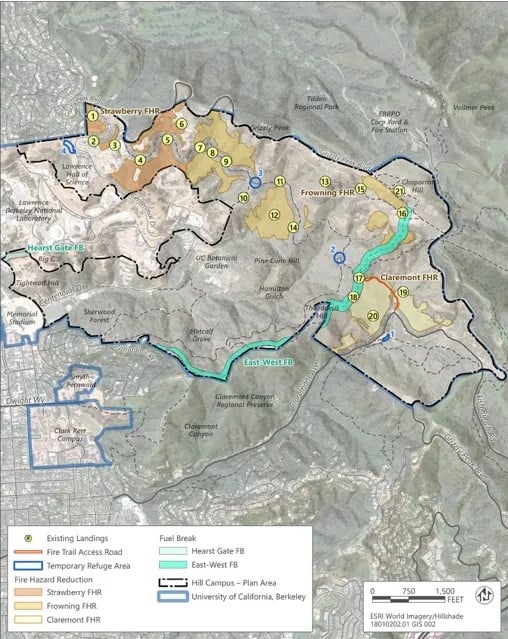
It seems as if the disagreement over the tree removal plan revolves around different philosophies on fire mitigation, while one side is supporting the university's efforts, considering the removal of eucalyptus trees as a necessary measure since they are a major cause of wildfire spread due to their oil content, the other side, represented by the Hills Conservation Network, sees the issue from a completely different angle, arguing that clearing large trees is actually counterproductive and that reducing the understory fuels should be the main focus instead, but with the court's decision, UC Berkeley now has the green light to commence its Wildland Vegetative Fuel Management Plan, covering around 98 acres of fire hazard fuel reduction treatments, reports SFGATE.
Despite the recent court decision, the debate over the effectiveness and possible drawbacks of the tree removal plan has not subsided, with the Hills Conservation Network's President, Dan Grassetti, expressing concerns about potential negative impacts on the environment, specifically mentioning the loss of fog drip, which acts as a significant factor in mitigating fire risks in the East Bay hills, and whether the organization should appeal the court's decision, as he told SFGATE, however, time is ticking, and they have less than two months to make a decision.
On the other hand, Jon Kaufman, President of the Claremont Canyon Conservancy, explained to SFGATE how his organization was actually in favor of the university's tree removal plans and just wanted a more thorough environmental impact report before the plans were approved, noting that they hoped the Hills Conservation Network would not appeal the court's decision, which could further delay the project's progress, adding that their concern is about preserving open space and wildfire safety, so people can enjoy living in the areas near the canyon with reduced risk.




