

























































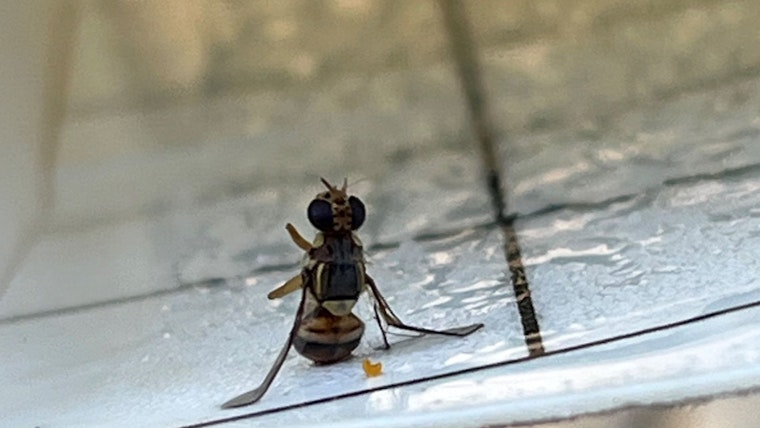
Multiple Oriental Fruit Flies were detected in portions of Contra Costa and Santa Clara counties prompting immediate quarantine action.
The Oriental Fruit Fly, native to southern Asia and neighboring islands, is known to target over 230 different fruit, vegetable, and plant commodities. California's crops like grapes, pome, stone fruits, citrus, dates, avocados, tomatoes, and peppers are all vulnerable to the invasive insect. Female fruit flies lay eggs inside the fruit, which then hatch into maggots that tunnel through the flesh, rendering the produce unfit for consumption.
According to the Contra Costa County report, the detections of the flies near Brentwood and Oakley led to a 99-square-mile quarantine zone, while in Santa Clara County, a 112-square-mile zone has been established following discoveries in Santa Clara and Sunnyvale. These zones are subject to specialized treatment programs aimed at eradicating the flies before they can further endanger the region's crops and natural resources.
CDFA Secretary Karen Ross notes the severity of the situation, citing a United Nations report on the global economic impact of managing invasive species, which reaches into the hundreds of billions of dollars annually. "We're all in this together as we work to reduce this impact," Ross said.
Among the various approaches employed in combating invasive species like the Oriental Fruit Fly, Integrated Pest Management (IPM) principles have shown the most success. The "male attractant" technique is being used as the cornerstone of the current eradication effort, involving the application of a fruit fly attractant mixed with a small dose of the organic pesticide, Spinosad.
Male fruit flies are drawn to this mixture and perish after consuming it. Applied approximately 8-10 feet off the ground on street trees and other surfaces, this treatment program is being carried out over an area extending 1.5 miles from each site where Oriental Fruit Flies were trapped. With the recent quarantine measures in place, agricultural officials work tirelessly to eliminate this persistent pest.
Although invasive species can sometimes be detected in agricultural regions, it would seem that the majority are initially found in urban and suburban areas. The most common way for these pests to enter a state like California is by "hitchhiking" in fruits and vegetables illegally brought back by travelers from infested regions or through packages sent to the state containing homegrown produce from other countries.
The "Don't Pack a Pest" campaign by www.dontpackapest.com pleads with travelers and those mailing packages to take preventative measures to help protect California's agricultural and natural resources from invasive pests like the Oriental Fruit Fly.
Residents in the affected areas are urged not to move fruits or vegetables from their property but are able to consume or process them on-site, as per Contra Costa County's tweet. By double bagging and disposing of homegrown produce in the regular trash, not green waste, citizens can help prevent the spread of this invasive species.
To prevent the spread of fruit flies via infested homegrown fruits and vegetables @CCCounty Agriculture Commissioner is urging residents not to move any fruits or vegetables from their property. Learn more here: https://t.co/SEdjEs11IT pic.twitter.com/tq5NIbyGdX
— Contra Costa County (@CCCounty) September 12, 2023





