

























































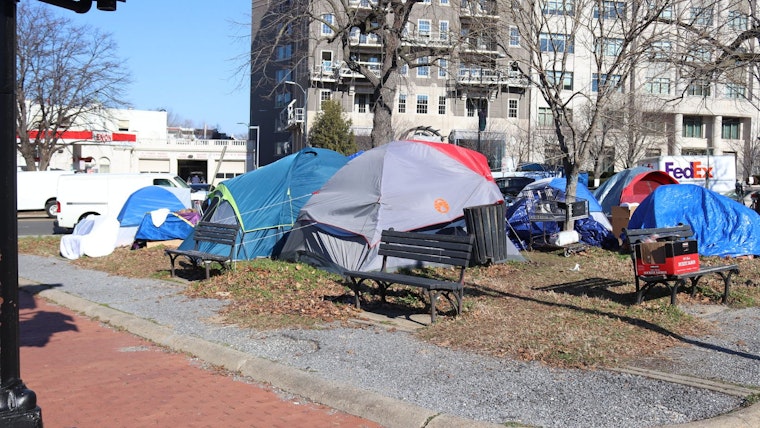
San Diego is currently facing a tangled web of legal challenges as it tries to address this growing crisis. For instance, the city struggles with restrictions that stem from various legal settlements and court rulings, all of which play a crucial role in understanding the challenges they face today, according to Inside San Diego.
Starting with a 2007 settlement, San Diego was prohibited from enforcing illegal lodging violations between 9 p.m. and 5:30 a.m., which limited the city's power in handling homeless situations. Subsequent settlements in 2010 and 2011 paved the way for complex rules around lodging and encampment abatements. Further complicating matters, a 2019 settlement resulted in the San Diego Police Department adopting a progressive enforcement model for encroaching public property cases where the officers offer shelter before taking enforcement action
Additionally, the City of San Diego must abide by federal, state, and local laws in addressing homelessness. A case in point is the 2018 ruling of Martin v. Boise, where the United States Court of Appeals for the Ninth Circuit declared that governments cannot criminalize indigent, homeless people for sleeping outdoors on public property without any viable shelter option. This ruling further restricted the city's capacity to address homeless encampments.
As cities grapple with these complicated legal restrictions, another challenge stemming from the City of Grants Pass in Oregon might soon reach the United States Supreme Court. The case in question pertains to the regulation of public spaces where homeless individuals can set up camp. In response to this legal challenge and to untie the hands of cities, San Diego intends to file an amicus brief supporting the appeal, as cities are attempting to address the significant public health and safety dangers posed by unsafe and unsanitary homeless encampments.





