

























































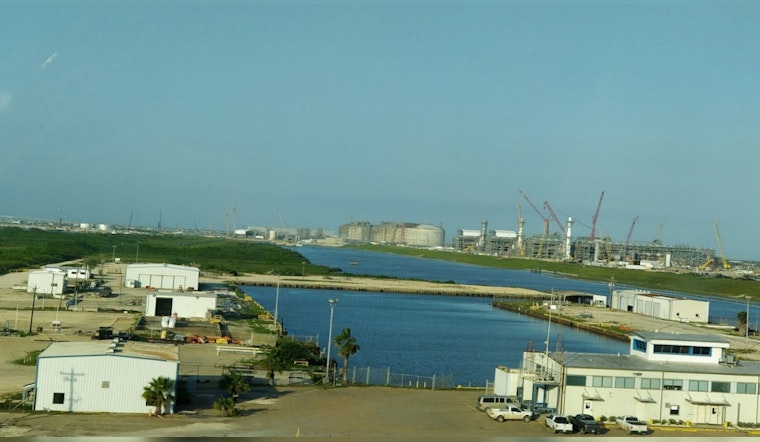
Brazoria County, Texas, is once again at the center of a heated battle over environmental and public health concerns as community voices and legal challenges clash with the oil industry's unabated expansion. Local activists, including Melanie Oldham, a director of Better Brazoria, took to the international COP28 climate conference last June, following a recent explosion at Freeport LNG in their county.
According to a KPRC 2 report, Oldham, who has been a vocal critic of the local industry, participated in panels and rallies at COP28 to emphasize the frequency of health issues in areas like Freeport, pointing out that “The American Lung Association gives Brazoria County a ‘F’ for air quality every single year,” Global leaders responded to such concerns at COP28 with pledges to transition away from fossil fuels, offering a glimmer of hope to those living in the shadow of heavy pollution.
Another environmental storm brews as a coalition of environmental and community groups filed suit against the U.S. Department of Transportation over the approval of the Sea Port Oil Terminal (SPOT), poised to be the nation's largest offshore export terminal. As reported by the Sierra Club, SPOT has the capacity to export a staggering 2 million barrels of crude oil per day, which would significantly increase greenhouse gas emissions.
Moreover, the lawsuit spotlights failure by the Maritime Administration to adequately consider the environmental impact and public health ramifications, including the particularly endangered Rice’s whale population in the Gulf. Gwen Jones, a Freeport resident, emphasized, "We're already dealing with the toxic pollution from the petrochemical industry in our community that harms our health. By taking legal action, we're making it clear today that we won't stand for another facility, like the Sea Port Oil Terminal, to dump even more chemicals in our neighborhoods where Black and Brown families live."
These concerns echo statements by Oldham, who advocates for the immediate revocation of SPOT’s authorization, stating, "We demand the Maritime Administration immediately revoke their authorization for the SPOT facility, because our community is already overburdened by the fossil fuel industry."
Nearly three-fourths of the census block groups within one mile of SPOT's projected onshore infrastructure are potential environmental justice communities, bearing the brunt of nearly 40 million pounds of pollution annually attributed to industrial facilities in the county.



