

























































In a significant leap forward for Alzheimer's research, MIT scientists have developed an innovative therapy that shows potential in mitigating neuroinflammation, a key factor in the progression of the disease. The technique utilizes specially designed lipid nanoparticles to deliver small interfering RNAs (siRNA), silencing the activity of a problematic protein in the brain. This approach was detailed in a report published in the journal Advanced Materials.
Current COVID-19 vaccines have already demonstrated the efficacy of lipid nanoparticles (LNPs) in ferrying messenger RNA to target cells. Similarly, this novel study, backed by names like The JPB Foundation and The Picower Institute for Learning and Memory, has adapted LNPs to curb the production of the PU.1 protein by suppressing the Spi1 gene. This protein has been strongly associated with inflammatory processes in Alzheimer’s disease. While previous attempts to quell microglia inflammation required a variety of methods, the team's customized LNP—dubbed "MG-LNP"—proved especially potent and safe in delivering the genetic material.
"I still remember the day when I asked to meet with Bob to discuss the idea of testing LNPs as a payload to target inflammatory microglia," said co-senior author Li-Huei Tsai of MIT, as told to MIT News. Collaborating with Robert Langer, a pioneering figure in nanoparticle drug delivery, the group embarked on a mission to tackle Alzheimer's-related neuroinflammation directly at its genetic roots.
The team initially tested their therapy on cultured human cells and mice. It became clear that injection into cerebrospinal fluid maximized the impact on microglia, the brain's immune cells, while sparing other organs. The standout formulation was MG-LNP, which not only performed well in cells but also in vivo, showcasing its potential as a ground-breaking therapeutic avenue. "These findings support the use of MG-LNP-mediated anti-PU.1 siRNA delivery as a potential therapy for neuroinflammatory diseases," the researchers concluded in their study.
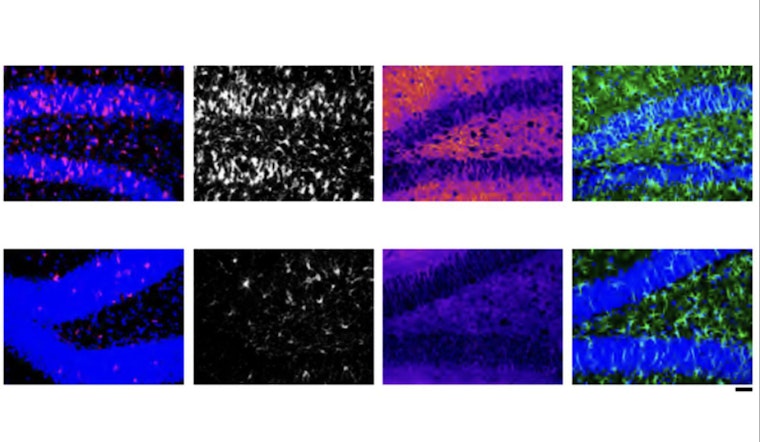
Furthermore, the researchers conducted trials in two mouse models mimicking brain inflammation scenarios. In both cases, MG-LNP's delivery of anti-PU.1 siRNA resulted in a marked reduction of PU.1 levels and related inflammatory markers, akin to the results seen in cultured human cells. This proof-of-principle success heralds further testing and, possibly, a leap towards applications in human treatments for neuroinflammatory conditions.
The endeavor has been a team effort, with contributions from MIT's Langer Lab graduate student Jason Andresen and former Tsai Lab postdoc William Ralvenius as co-lead authors. Funding for the cutting-edge study was sourced from several institutions and foundations, including the Swiss National Science Foundation and the Alzheimer's Association.





