

























































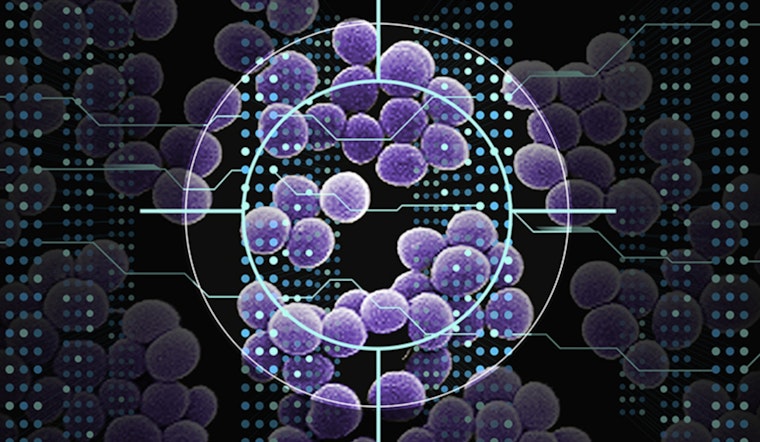
In a major breakthrough, MIT researchers have harnessed artificial intelligence to pinpoint a new arsenal in the fight against one of the world's most formidable bacterial foes. A study published in Nature demonstrates that their cutting-edge deep learning model can flush out potential drugs capable of knocking down methicillin-resistant Staphylococcus aureus (MRSA), notorious for its role in deadly infections and resistance to standard antibiotics.
MRSA, a bane to public health, is linked to more than 80,000 infections and 10,000 mortalities annually in the United States. But the ingenuity at MIT's Institute for Medical Engineering and Science (IMES) and the Department of Biological Engineering, under the guidance of Professor James Collins, might alter its course. According to a statement obtained by MIT News, the newly discovered compounds tout low toxicity towards human cells, a promising sign for future drug development.
This isn't MIT's first rodeo with using sophisticated algorithms to discover drugs. Collins' team has been utilizing deep learning, specifically, to develop potential treatments against various drug-resistant bacteria, including Acinetobacter baumannii. But this time, they aimed to go a step further, peering into the 'black box' of AI to understand what the model was looking for. This transparency could pave the way for a swifter, more efficient search for lifesaving medications.
Felix Wong postdoc at IMES and the Broad Institute, detailed the process of training the model with data from 39,000 compounds tested against MRSA, thus equipping the AI with the know-how to assess new molecules for their antibiotic potential. In an interview with MIT News, Wong explained, "The model is trained on many examples like this. If you then give it any new molecule, a new arrangement of atoms and bonds, it can tell you a probability that that compound is predicted to be antibacterial."
Mining through an impressive 12 million compounds, the model flagged several promising classes of antibiotics. Lab tests and mouse model trials narrowed these down to two standout compounds that efficiently reduced MRSA populations. Collins and his team, marching on with their mission, are now leveraging these findings through the Antibiotics-AI Project, aiming to take their discoveries from the lab bench to clinical settings, while also targeting other menacing bacterial strains.
The discovery has caught the attention of Phare Bio, a nonprofit also led by Collins, which intends to conduct detailed analysis on these compounds. As the research joins forces with several esteemed institutes, including Harvard and the Broad Institute, among others, there's an air of optimism about the future of antibiotic development—one that's backed by the joint forces of AI and human ingenuity. The study's support comes from a range of patrons, including the James S. McDonnell Foundation, the U.S. National Institute of Allergy and Infectious Diseases, and various fellowships and foundations, as well as anonymous donors. With these backers, the quest against resistant bacteria is gaining new ground, powered by the dual engines of scientific curiosity and technological adeptness.





