

























































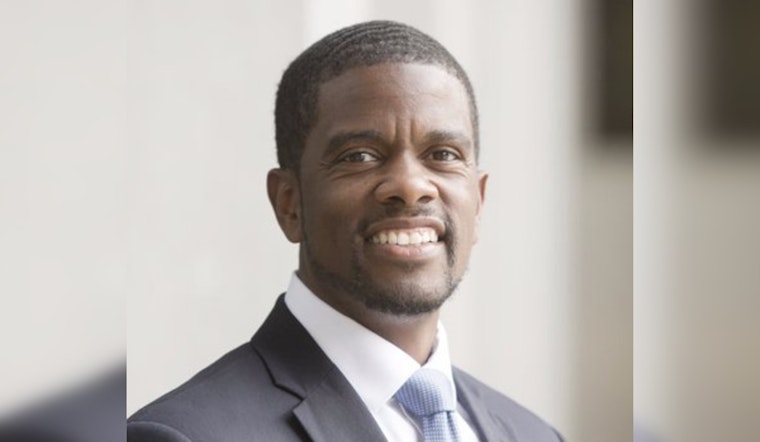
St. Paul, Minnesota's experiment with giving away free money is claiming to pay off. In a groundbreaking move by Mayor Melvin Carter and his administration, the city launched the People's Prosperity Pilot, a guaranteed income program that dished out $500 monthly to select families. According to the City of Saint Paul's official announcement, the pilot not only upped employment among participants but also gave them a healthier, more stable lifestyle.
While some might scratch their heads at handing out cash with no strings attached, the study from the Center for Guaranteed Income Research at the University of Pennsylvania seems to back up the city's claims. Between the launch and six months post-pilot, employment among recipients jumped from 49 percent to 63 percent. Besides, it seems to have empowered participants to smoothly navigate financial ups and downs without falling into the anxiety or depression that often accompany poverty.
"A guaranteed income addresses the basic cause of poverty—a lack of money," said Mayor Carter. Citing the pilot, he claimed that "a relatively small, no-strings-attached payment can open up a world of opportunity." The results from St. Paul are seemingly trumpeting success stories similar to the first-ever mayor-led guaranteed income program in Stockton, CA, which showed positive outputs from better jobs to safer housing and improved mental well-being, as confirmed by the City's official statement.
Moreover, St. Paul's test run has turned heads beyond Minnesota's borders, pulling 125 mayors into the Mayors for a Guaranteed Income fold. Participants like Lucille O'Quinn even waxed eloquently about the change, telling the City of Saint Paul, "It helped me go from survival mode to feeling like my family is going to be okay, no matter what." And with Michael D. Tubbs, founder of Mayors for a Guaranteed Income, nodding to the tangible uplift in communities, it appears the evidence is mounting.
Questions still linger about the long-term feasibility of such programs, but proponents are doubling down on their potential, pushing for bigger and bolder moves like Minnesota's massive expansion of the Child Tax Credit.





