

























































In a groundbreaking stride against the tide of debilitating diseases, UMass Amherst's whiz team, harnessing the stealth of modern technology, has deciphered the abstruse glycan-based code critical for protein origami—potentially revolutionizing the way we treat an array of illnesses from Alzheimer's to cystic fibrosis. In an article published on December 4 in Molecular Cell, researchers cracked open the elusive mechanism ensuring proteins fold just right; a process going haywire means trouble with a capital T for human health.
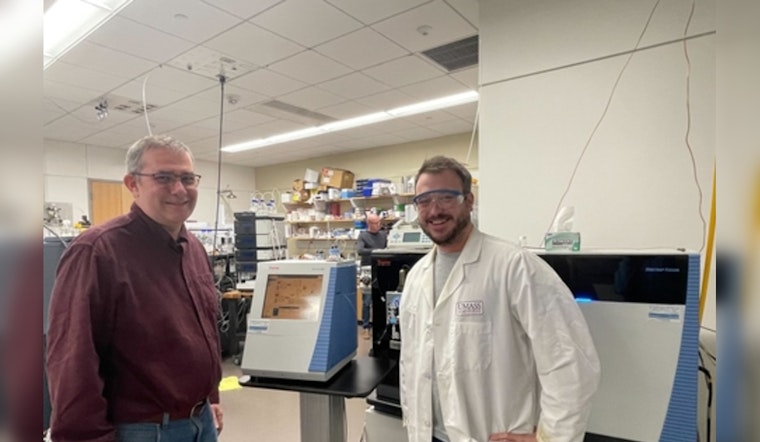
Not all villains come in the form of bacteria and viruses; some, in fact, are products of our own cellular missteps. Misfolded proteins, which can give rise to serious calamities ranging from lung diseases to neurodegeneration, now face a new adversary in UMass's meticulous analysis of the serpin proteins. The study, led by Professor Daniel Hebert and his PhD protege Kevin Guay, probed how carbohydrate add-ons to the serpins secure their correct conformation. "The tools we have now, including glycoproteomics and mass spectrometry at UMass Amherst’s Institute for Applied Life Sciences, are allowing us to answer questions that have remained open for over 25 years," Hebert declared in a statement obtained by UMass Amherst News.
The landscape of genetics and cell biology is witnessing a paradigm shift, with the spotlight now on the secondary code woven by carbohydrates that serves as a barcode for protein folding within the cell's sculpting studio—the endoplasmic reticulum (ER). The usual suspects thought to hold the reigns of life—DNA's A, C, G, and T—are now sharing the stage with N-glycans, complex sugar molecules acting as chaperones dictating the faultless formation of proteins, crucial for our bodies.
It seems simplicity was never on the menu in our cellular cookbook. The dance of protein folding, overseen by the ER's gatekeeper enzyme, UGGT, involves tagging misshaped proteins with sugar markers as signals for refolding or destruction. These findings are not just academic. Guay, nearing the finish line of his doctoral journey, notes, "We now have a platform for extending our understanding of how sugar tags can send proteins for further quality control steps, and our work suggests that UGGT is a promising avenue for targeted drug therapy research," as mentioned on UMass Amherst News.
The implications of this research are colossal. Lila Gierasch, UMass Amherst's distinguished professor of biochemistry and molecular biology and a paper co-author, expressed excitement over the discovery "that glycans act as a code for protein folding in the ER," as cited in the same article. The marching orders are clear: with the codex for cellular protein origami now in hand, the war on diseases caused by protein folding gone rogue is poised to leap forward, potentially spelling relief for millions suffering worldwide.





