

























































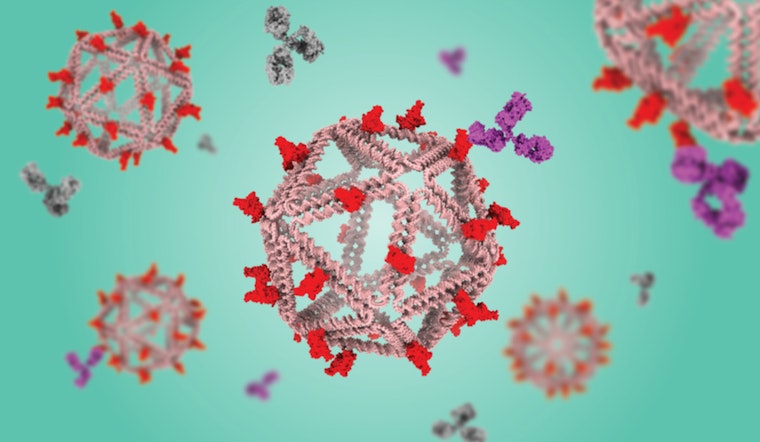
In a significant stride towards vaccine innovation, researchers from MIT and the Ragon Institute have engineered a virus-like particle using DNA, which may boost our immune arsenal against elusive viruses such as HIV, influenza, and SARS-CoV-2. In pre-clinical trials using mice, these DNA-based vaccines showcased a potent ability to focus the body's defenses by inducing a strong antibody response specifically targeting the virus in question, as MIT News reported.
The breakthrough revolves around a DNA scaffold structure that can carry multiple copies of a viral antigen, in contrast to traditional protein scaffolds which tend to attract undue immune reactions, a situation leading to a diluted focus on the actual viral foe, thereby often resulting in the immune system squandering resources on inconsequential targets but this novel approach ensures the immune system remains laser-focused on the antigen of interest, without distraction. Mark Bathe, an MIT professor of biological engineering, elaborated on this innovation, "DNA, we found in this work, does not elicit antibodies that may distract away from the protein of interest," he told MIT News.
Notably, B cells, the very factories of antibodies, are notably activated by the DNA-based scaffold, paving the way for potentially durable immunity. These cells can linger for decades, which is in sharp contrast to T-cell immunity that other vaccines like the mRNA ones seem to stimulate more robustly. Daniel Lingwood, an associate professor at Harvard Medical School, highlighted the strategic aim behind the technique, “We’re interested in exploring whether we can teach the immune system to deliver higher levels of immunity against pathogens that resist conventional vaccine approaches," in a statement obtained by MIT News.
The scaffold made from DNA holds an added advantage in that it sidesteps the issue of the immune system becoming preoccupied with the transport mechanism itself, a common complication in protein-based vaccines; these protein components can, in a sense, become too familiar to the immune system upon repeated encounters, subsequently undermining the body's response to the actual pathogen but the newly crafted DNA scaffold appears to elegantly avoid this pitfall by being ‘immunologically silent,’ a term used by Lingwood to describe its non-reactive nature. This research paves the way for broader applications and could potentially lead to the development of a more universal vaccine that targets numerous strains of a virus, including SARS-CoV-2 and its relatives.
Supported by the National Institutes of Health, the National Science Foundation, and the Fast Grants program, this promising leap forward in particulate vaccine technology was detailed in Nature Communications. As the investigation advances, it remains a testament to the robust and relentless pursuit of scientific knowledge, aiming to render previously untouchable pathogens vulnerable to our medical toolkit, according to the comprehensive findings shared by MIT News.





