

























































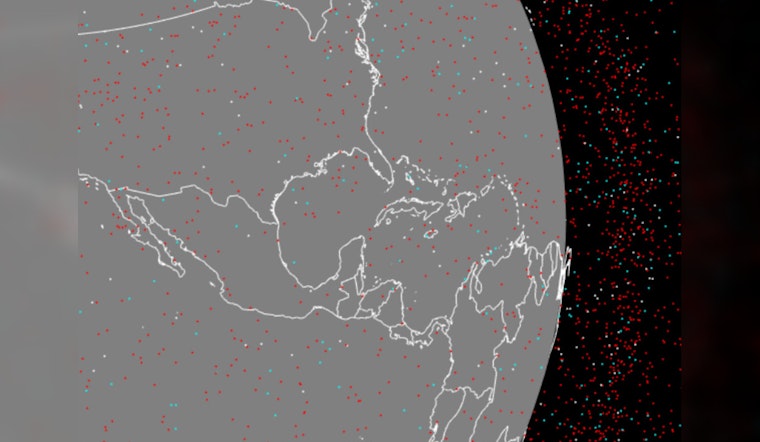
MIT's latest foray into tackling the ever-growing problem of space junk just got real. The institute's Astrodynamics, Space Robotics, and Controls Laboratory (ARCLab) has released an open-source tool designed to simulate and predict the orbiting debris paths crowding our skies. Presented at the Organization for Economic Cooperation and Development (OECD) Space Forum Workshop on December 14, the MIT Orbital Capacity Assessment Tool (MOCAT) is set to be a game changer for anyone needing to quickly evaluate space traffic and the risks posed by debris.
MOCAT isn't merely crunching numbers for the sake of it. The tool is geared up to help to effectively visualize the future of our crowded space environment. Implemented correctly, the software will assist satellite operators and policy makers to more clearly understand the repercussions of their actions—or lack thereof—on the space debris problem. The open-source nature of MOCAT also puts power into the hands of regulators and the public to make informed decisions based on the tool's data-driven simulations, as detailed by MIT News.
What sets MOCAT apart is its personalized touch. It models individual objects with precision and can adapt to numerous parameters and collision probabilities. Whether it's about understanding the effect of a satellite launch or mitigating the aftermath of a cosmic fender bender, MOCAT is designed to handle it all, offering both a wide-angle and a zoomed-in perspective on objects dancing around Earth’s orbit.
In a bold move, the ARCLab's decision to release MOCAT to the public domain is rooted in widening participation in space sustainability. Richard Linares, MIT associate professor of aeronautics and astronautics and the principal investigator for MOCAT, told MIT News, “MOCAT represents a significant leap forward in orbital capacity assessment. By making it open-source and publicly available, we hope to engage the global community in advancing our understanding of satellite orbits and contributing to the sustainable use of space.”
MOCAT has two main components: MOCAT-MC for advanced simulations and MOCAT-SSEM for rapid predictions. They're both available on GitHub, inviting tech enthusiasts and professionals to dive in and possibly, to immediately begin improving the tool's capabilities. With initial funding from DARPA and NASA's Office of Technology and Strategy, the tool’s development showcases a commitment to pioneering efforts in maintaining our off-world surroundings.
NASA is already singing praises for the MIT initiative. "This open-source modeling tool is a public good that will advance space sustainability, improve evidence-based policy analysis, and help all users of space make better decisions,” said Charity Weeden, associate administrator for the Office of Technology, Policy, and Strategy at NASA headquarters, hailing the project's transparency and dedication to the public interest.





