

























































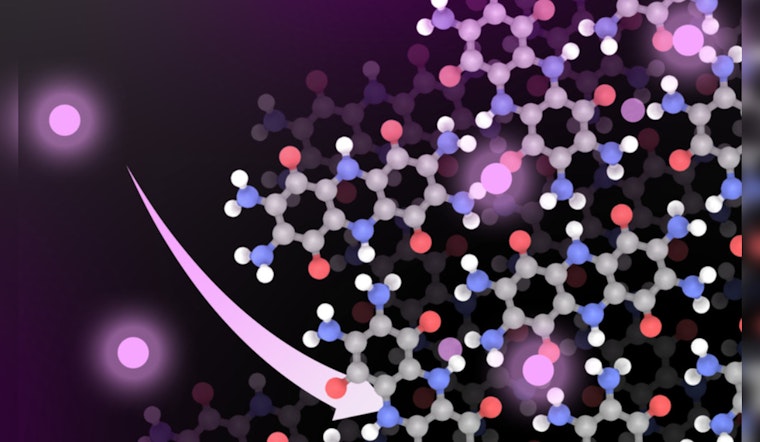
MIT chemists are steering the electric vehicle industry towards greener pastures with their latest invention, a cobalt-free battery cathode that has the potential to diminish the electric vehicle (EV) industry's dependency on critical metals. Traditional EV batteries typically depend on cobalt, a scarce and costly metal associated with severe environmental and social implications stemming from its mining practices. However, as reported by MIT News, the new lithium-ion battery with an organic-based cathode material could perform comparably without the adverse baggage.
Confronted with the challenge of cobalt's high costs and its politically fraught supply chain – largely concentrated in unstable regions – researchers at MIT have responded with innovation, cobalt and nickel in batteries have imparted desired attributes like stability and high energy density yet come at a steep financial and environmental cost which the organic battery's development could circumvent. "I think this material could have a big impact because it works really well," the W.M. Keck Professor of Energy at MIT, Mircea Dincă, told MIT News, "It is already competitive with incumbent technologies, and it can save a lot of the cost and pain and environmental issues related to mining the metals that currently go into batteries."
The research, recently published in the journal ACS Central Science, demonstrates that this innovative cathode material conducts electricity just as well as traditional cobalt counterparts and has comparable storage capacity, it can even be charged up at a faster rate. The cathode is composed of layers of an organic small molecule known as TAQ (bis-tetraaminobenzoquinone), structured in a graphite-like formation, which offers notable benefits like stability and insolubility, reducing degradation over multiple charging cycles. The team, comprising lead authors Tianyang Chen PhD '23, former MIT postdoc Harish Banda, and collaborators including postdoc Jiande Wang, graduate student Julius Oppenheim, and a University of Bologna research fellow Alessandro Franceschi, has initiated a potential shift in automotive power sources, highlighted by the over 2,000 charge cycles the material can endure with minimal degradation, as voiced by Dincă.
One of the critical ingredients propelling this advance is the strategic use of fillers such as cellulose and rubber to enhance the organic material's adhesion to the battery's current collector while also averting potential damage from lithium ions during charging, these additions represent less than a tenth of the cathode's mass, ensuring storage efficiency is preserved. Lamborghini has already secured the licensing rights to this promising technology, exemplifying the commercial interest it has sparked. With its sights firmly set on further breakthroughs, Dincă's lab continues to probe the frontier of battery technology, entertaining the possibility of swapping out lithium for more abundantly available elements like sodium or magnesium.





