

























































The game-changing research team at MIT is revolutionizing the field of chemical analysis with a 3D-printed mass filter. In an unprecedented leap, the scientists used additive manufacturing to create a key component of a mass spectrometer, a device known for its bulkiness and high cost, reshaping it into a portable, affordable, and reliable tool that can be used in the most remote of locations.
Previously confined to labs due to their size and fragility, mass spectrometers are invaluable in fields like toxicology and geology, now, with the innovative work of Luis Fernando Velásquez-García, a principal research scientist at MIT's Microsystems Technology Laboratories, and his colleagues, these machines could be taken anywhere, from dense rainforests to outer space environments, irrelevant of the former limitations, like size and expense. Velásquez-García told MIT News, “We are not the first ones to try to do this. But we are the first ones who succeeded at doing this. There are other miniaturized quadrupole filters, but they are not comparable with professional-grade mass filters. There are a lot of possibilities for this hardware if the size and cost could be smaller without adversely affecting the performance.”
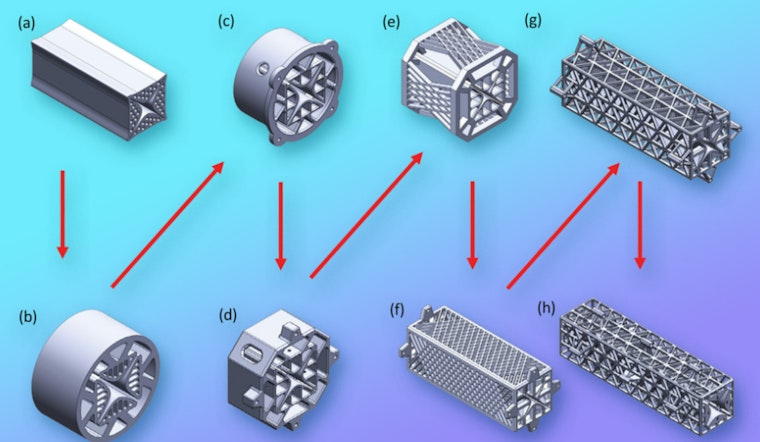
The newly developed quadrupole filter is a marvel of finesse, designed to effectively sort ions when subjected to electromagnetic fields. Far from being a rudimentary prototype, it boasts the precision of its heavyweight, costlier siblings, all the while being manufactured swiftly and at a tiny fraction of the price. In addition, the absence of any assembly requirements, a common source of defects in traditional quadrupoles, underscores its robustness and performance reliability.
The 3D printing process using glass-ceramic resin, not only delivers precision but also withstands extreme temperatures making it suitable for a variety of applications, ranging from atmospheric analysis on Earth to surveys of chemical compounds on distant planetary bodies; this is where the 3D printing shines, where it can form complex shapes like hyperbolic rods, which are difficult to achieve through conventional production methods, are essential for optimizing mass filtering capabilities.
Describing the significance of their findings, Graham Cooks, a Professor of Chemistry at Purdue University noted, “The advantages derive from these facts: It is much smaller and lighter than most commercial counterparts and it is fabricated monolithically, using additive construction. … It is an open question as to how well the performance will compare with that of quadrupole ion traps, which depend on the same electric fields for mass measurement but which do not have the stringent geometrical requirements of quadrupole mass filters.”, as mentioned by MIT News.
Further enhancement of the quadrupole's performance is on the research agenda, with strategies including refining its length for improved ion filtration precision, in addition to exploring alternative ceramic materials for their heat transference properties, “Our vision is to make a mass spectrometer where all the key components can be 3D printed, contributing to a device with much less weight and cost without sacrificing performance. There is still a lot of work to do, but this is a great start,” Velásquez-García added.





