

























































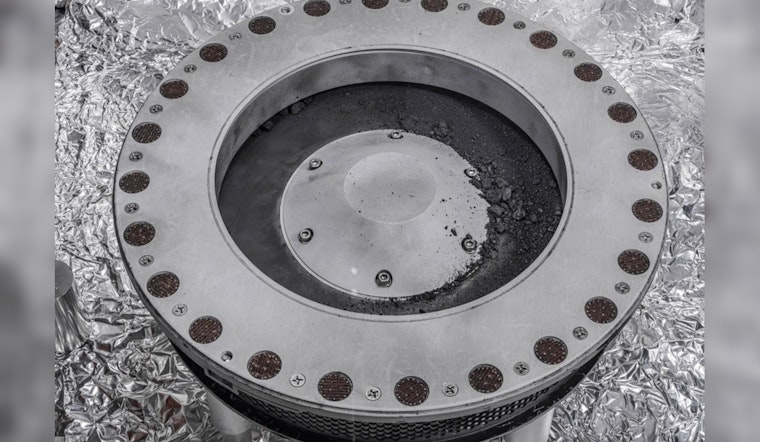
After overcoming a technical hitch, NASA scientists have finally cracked into a cosmic cache of rocks and dust gathered from asteroid Bennu by the OSIRIS-REx spacecraft. The team at Johnson Space Center triumphed this week by removing two pesky fasteners that had blocked access to a bulk of the material that traveled 3.9 billion miles back to Earth, arriving last September. The skilled engineers and scientists earned praise for their ability to "design, develop, and test new tools" to solve the problem without contaminating the precious samples, the Houston Chronicle reported.
The initial 70 grams extracted from the cache exceeded NASA's goal by 10 grams, however, the remaining bounty's weight is still to be determined. Eileen Stansbery from NASA's Johnson Space Center conveyed her excitement regarding the untouched samples, acknowledging the team's innovative problem-solving abilities. The catalog of materials, which promises to reinvigorate scientific research will be published this spring, allowing researchers worldwide to request portions for study. Already, the analysis of a previous portion of the samples has identified indispensable elements for life, such as carbon and water, sparking theories that asteroids like Bennu could have been life's harbinger on Earth, according to NASA.
Further investigation of the samples is reinforced by the enthusiasm of non-NASA scientists like Thomas Zega, a member of the OSIRIS-REx team and professor at the University of Arizona's Lunar and Planetary Laboratory. Zega, who joked about whisking away a sample from the Johnson Space Center under the cover of darkness, leads efforts to understand the particle sizes, minerals, and chemical composition of Bennu's materials. These analyses are piecing together a chemical history that provides a narrative of the asteroid's past and its constituents, as told by the Houston Chronicle.
This recent breakthrough, releasing the stubborn fasteners, was anticipated by the team, Zega stated, allowing the curation team the needed time to remove the fasteners without harming the sample. Public curiosity and impatience over the delay were addressed by Zega with a nod to proposals such as simply "drilling it out," a tactic he cautioned against due to the risk of contamination. This patience has paid off, with NASA confirming the presence of carbon-rich material in the previously accessed samples, which not only furthers our understanding of our own planet's history but also helps gauge the potential threats from celestial bodies, as NASA stated. Over the next two years, more comprehensive analyses are due, while the promise of new scientific discoveries remains as vast as the journey these samples undertook.




