

























































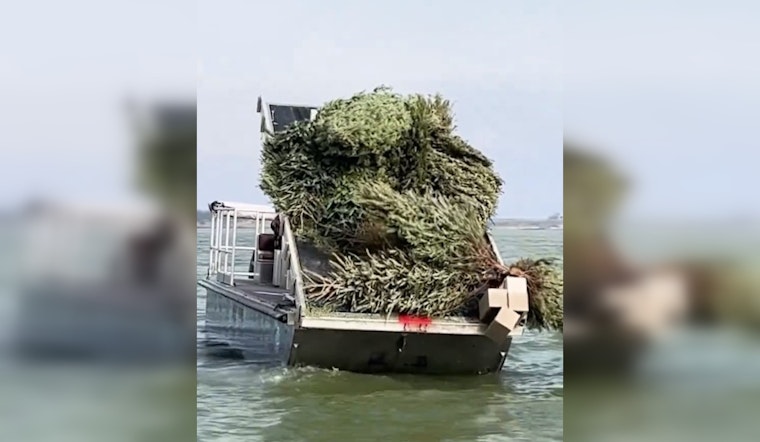
Granger Lake's underwater landscape just got a greener makeover and local fishermen could be the ones to reel in the benefits. The Texas Parks and Wildlife Department (TPWD), outdoor gear company Yeti, and the U.S. Army Corps of Engineers have teamed up to throw more than a Yuletide nod to fish and fishers alike. These organizations have recently sunk over 160 used Christmas trees to serve as new fish habitats within the lake's waters.
These submerged fir trees, according to Tim Birdsong, TPWD Inland Fisheries Division Director, not only provide immediate shelter for fish but also foster greater public awareness about the importance of restoring fish habitats in Texas' waters. The alliance has helped to quickly put together a habitat conducive to aquatic life, and their installation as reefs is expected to be a game changer for both fish and anglers. “We are incredibly thankful to our partners at Yeti and the Army Corps of Engineers," Birdsong told TPWD. With the combined help of the group and volunteers, TPWD manages to deliver around 50 fish habitat projects annually throughout the state.
Christmas trees recycled at fish habitat! 🎄🐟
— TX Parks & Wildlife (@TPWDnews) January 12, 2024
We stocked Granger Lake with some recycled trees to make #TexasFishing even better.
🗺️ We'll post coordinates to https://t.co/oDcMCBwlIY
Thanks to @YETICoolers for helping collect the trees!@TPWDfish pic.twitter.com/jRxPSMSomz
These Christmas tree reefs aren't just about drawing in the local largemouth bass and crappie either. They also serve an ecological purpose, breaking down to feed aquatic organisms down the food chain, said Patrick Ireland, San Marcos and Austin District Supervisor of TPWD Inland Fisheries Division. “Granger is known for crappie and this reef should benefit both the anglers and fish at this lake, which otherwise has limited natural fish habitat,” Ireland explained in TPWD's announcement. The gradual degradation of the trees is an organic process that provides food for the microorganisms essential to the lake’s ecological balance.
GPS locations of the fish attractors at Granger Lake will be updated in the coming weeks, and these hotspots are all conveniently available on the TPWD's fish attractor location webpage. This should significantly help to focus their fishing efforts on the most promising parts of the lake. "As reservoirs age, submerged aquatic habitat tends to degrade over the years as submerged timber decomposes," Ireland revealed. This trees-as-reef strategy is part of the department's ongoing efforts to mitigate the natural decline of aquatic habitats.
Even individuals who are inclined to get their hands wet for the cause of conservation have been encouraged by TPWD to collaborate with local fisheries management offices. The cooperation between authorities and community members is essential to maintain and improve the living conditions for fish in public bodies of water, ensuring that both recreational and environmental benefits continue to flow. For more information on habitat improvement and how to get involved, prospective conservationists are encouraged to connect with the relevant district fisheries management offices.





