

























































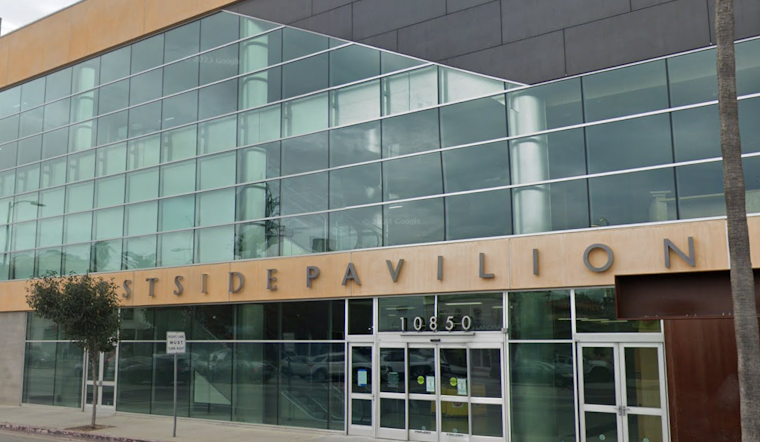
UCLA has taken over the defunct Westside Pavilion, plowing a whopping $700 million into the creation of a state-of-the-art research park that will tackle some of the most cutting-edge challenges in immunology and quantum science. The expansive 700,000-square-foot space, a mere stone's throw from the university's Westwood campus, will be transformed into a hive of academic and scientific innovation known as the UCLA Research Park.
The Research Park's future tenants include the California Institute for Immunology and Immunotherapy and the UCLA Center for Quantum Science and Engineering. The venture, which Governor Gavin Newsom lauded as a significant push towards reinforcing California as the epicenter of global innovation is expected to take just over three years to build, with an additional two to draw in top-tier talent, as per a statement acquired by KABC.
Newsom, speaking at the announcement, waxed optimistic about the state's trailblazing role in tech and science: "From the creation of the internet to the dominance of artificial intelligence, humanity's future happens here first." According to a statement by Newsom, shared by CBS News, the UCLA Research Park is a key move to "cement California's global economic, scientific and technological dominance into the 22nd century, and beyond."
UCLA Chancellor Gene Block highlighted the transformative nature of the acquisition, "This acquisition will be transformative for UCLA, our great city, and the world," according to CBS News. He commended the opportunity to convert the once-bustling shopping center into a nexus for world-altering research. The Westside Pavilion, which opened back in 1985 and saw its decline leading to a close in 2019, once hosted Google as a leaseholder for office space—a project that eventually fizzled.
The mammoth purchase was facilitated partly by a prospective $500 million investment, coupled with $200 million from the state's coffers already earmarked to kickstart the California Institute for Immunology and Immunotherapy. Eric Hudson, Ph.D., a physics researcher from UCLA, told KABC of the exhilarating potential the project holds: "In the next couple of years we're going to see machines, that could do things that could never be done on any conceivable classical machine. And that's when the fun's really going to start." UCLA and its partners look to the future with an eye on advancing research that promises a significant impact for the wider public good.



