

























































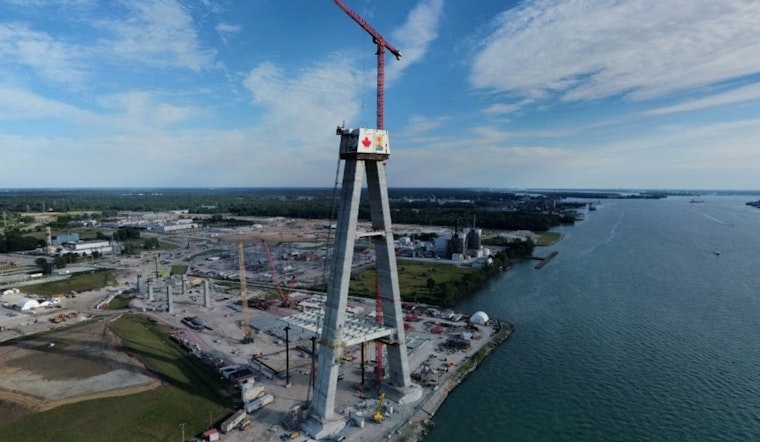
The Gordie Howe International Bridge, a $4 billion behemoth stretching over the Detroit River, is nearing a significant construction milestone expected to be reached this summer as the main span is completed to connect Detroit and Windsor, Canada. Officials at the Windsor-Detroit Bridge Authority and Bridging North America said the project has already hit notable progress with its towering presence altering both cityscapes, as reported by Freep.com. Originally slated to open to the public at the end of 2024, the bridge's timeline has slipped due to the COVID-19 pandemic, and it's now expected that travelers can cross starting September 2025.
The bridge's influence extends beyond its architectural impact, with a commitment of approximately $17 million toward community initiatives in Detroit and Windsor. So far, around $13 million has supported over 50 initiatives since 2019, enhancing neighborhoods and bolstering local economies. In Detroit, the investment includes five solar-powered cell phone charging and Wi-Fi stations, renovations for the Unity House community center, and food security programs, according to a statement obtained by The Detroit News. On the Canadian side, spending aims to bolster art-based youth programming and green space development, among others.
Construction progress has been notable, with "the back span decks of the new Gordie Howe International Bridge are now complete and the main span deck has reached about 328 yards over the Detroit River," detailed Roads & Bridges. Bridging North America's Jorge Gomez expressed the season’s achievements as reflective of a dedicated construction team's effort and substantial partner support. This summer's achievement will seal the gap, marking the unification of two nations by infrastructure.
Community engagement and support remain a cornerstone of the bridge project. Recipients of the latest round of financial distributions aim to spark a plethora of benefits. They include six initiatives each in Windsor and Detroit, topping the scales at $1.26 million USD of nearly $2 million allocated this year, and programs that seek to engage youth and foster environmental stewardship. For Kimberly Simmons, president from the Detroit River Project, the funding represents an opportunity to expand cultural and historical programming, as she told The Detroit News during Black History Month about the river's history as a safe haven.





