

























































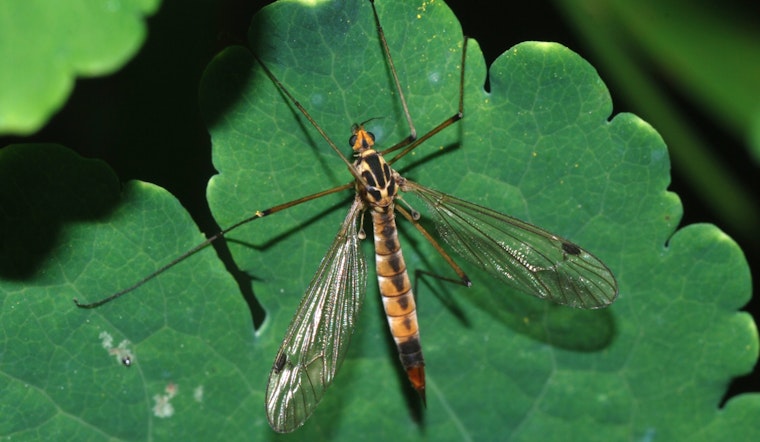
Houstonites might mistake the gangly insects swarming their city for mosquitoes, but these benign creatures are actually crane flies. According to the Chron, these flies, often dubbed "mosquito eaters," don’t pack a bite and are showing up in unusual abundance due to a mild winter and wet conditions.
Experts say the insects, which share a resemblance to mosquitoes with their extended bodies and long legs, thrive particularly after a rainy season. Having had their breeding frenzy fueled by Houston's generous rainfall, the city now sees an uptick in crane fly appearances. "Houston exceeded normal rainfall in January and this rain causes more crane flies," Brandi Keller, a Harris County horticulture agent with Texas A&M AgriLife, told the Houston Chronicle, which found that, contrary to popular belief, they can't actually eat mosquitoes because the adults lack the functional mouthparts required for feeding.
Meanwhile, the rise in numbers has caught the attention of those unsettled by the apparent mosquito doppelgängers. Molly Keck, a senior program specialist and entomologist for Texas A&M AgriLife, explained in a statement obtained by Chron, "Some people mistakenly call them mosquito hawks, but they neither eat mosquitoes nor suck blood. As adults, they have vestigial mouthparts and don't even feed." While adult crane flies pose no threat, in their larval stage, dubbed "leatherjackets," they can nibble on grass roots causing temporary damage to lawns.
Local experts are urging calm and patience as the crane flies are only here temporarily. "If you find them to be a nuisance, be patient," Lauren Davidson, the manager of Cockrell Butterfly Center at the Houston Museum of Natural Sciences, told the Houston Chronicle. She added that these insects play a role in pollination and are a significant part of the ecosystem, serving as food for birds and other wildlife. People wanting to keep the unwelcome guests out of their homes are advised to turn off outside lights and to keep their doors closed, as the flies are attracted to light.
Despite the annoyance they might cause, it's clear that these gangly flyers are just passing through, contributing to the circle of life in their brief existence. Houston residents can expect the crane flies to disappear as quickly as they arrived, with their lifespan as adults lasting only a few days to a couple of weeks. So, while they might be a nuisance now, Houstonians won’t have to tolerate them for much longer.



