

























































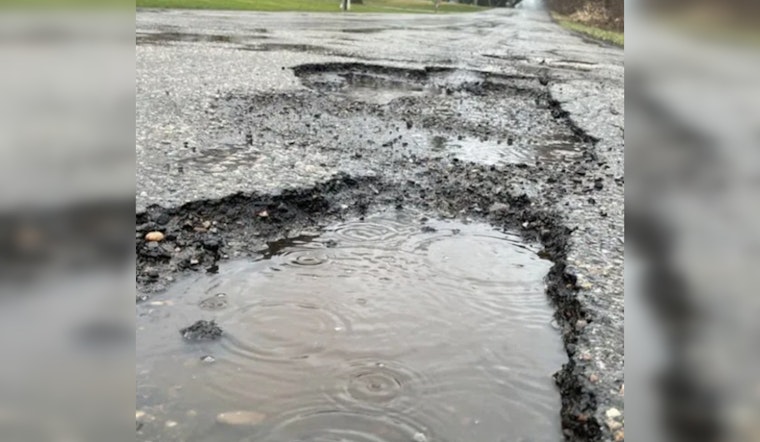
Michigan's roads are plagued with potholes and pitfalls, quite literally. There's a gaping chasm of cash needed to bring the state's county roads and bridges up to snuff, with a new report by the County Road Association (CRA) of Michigan now setting the price tag at a whopping $2.4 billion. That's a hefty hike up from the $1.8 billion called for just two years prior, and more than double the current funds allocated to tackle the task at hand, as per the Detroit News.
"We need the legislature and the governor to take a big step this year toward adequately funding all roads, especially the county road network," Denise Donohue, the CEO of the CRA, told WZZM 13. Despite improvements since 2019, these roads are suffering not only from the ravages of time but also from a stagnating fund not quite up to the task of swatting the snowballing costs of necessary repairs.
As things currently stand, the CRA's aspiration has federal-aid-eligible roads hitting a halcyon benchmark of 90% in good or fair condition. But the reality has these roads at a less than stellar 65%, with the sans-federal-aid roads trailing even further behind at 45%. Jerry Byrne of the Kent County Road Commission sees prices for asphalt ballooning by 69% and the cost of single axle trucks vaulting up 52% since 2021.
Michigan divvies up its road maintenance moolah according to Public Act 51 of 1951, which most agree is as outdated as a dial-up modem. The current system leaning heavily on motor fuels taxes and vehicle registration fees is facing erosion much like the roads it aims to sustain, with increasingly fuel-efficient cars and an uptick in electric vehicles leading to a lesser gas guzzle—and thus dwindling tax revenues, Detroit News reports.
Meanwhile, the CRA, armed with its latest investment plan, is hoping to steer the state legislature towards a more novel and sustainable solution to the current conundrum. This could include options such as a per-mile-driven tax that Donohue hinted at, which would help remedy the shortfall caused by high-maintenance hybrid and electric vehicles.
Residents, already feeling the pinch with each jarring jolt delivered by an unforgiving pothole, might find themselves digging deeper into their wallets for car repairs or, should the condition of the roads persist, potentially facing higher taxes. Drivers like Dylan Villerot and Marc Hemingway, who have already suffered their share of tire tragedies, might say the rough rides are adding insult to financial injury. "“It’s awful, and it never gets any better it seems like. There’s construction all the time,” Villerot recounted his experience to WILX.
Negotiations with the state legislature continue.





