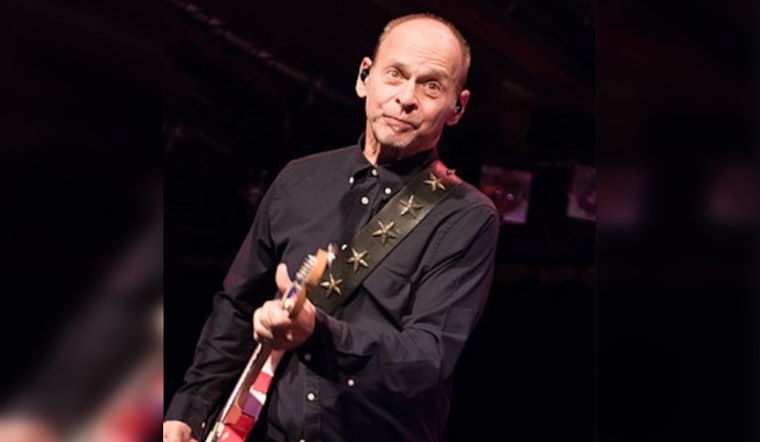
Wayne Kramer, a defining force of rock music and a co-founder of the political and heavy-hitting band MC5, passed away at 75, official social media channels announced Friday. The Detroit News reported that Kramer died at Cedars-Sinai hospital in Los Angeles due to pancreatic cancer, citing Jason Heath, a close friend and the executive director of Kramer's nonprofit organization, Jail Guitar Doors.
MC5, short for Motor City 5, stamped an indelible mark on American rock and punk history with their revolutionary message and ferocious sound. According to The Detroit News, Kramer's groundbreaking work continued right up to recent years with tours that included members from bands like Soundgarden and Faith No More, and the formation of We Are All MC5, a project he announced in 2022.
The Guardian noted Kramer was looking forward to the release of a new MC5 album in the spring of 2024, a testament to his undying spirit to "reignite that spirit of 1968." His dedication to his craft and activism remained fervent, with initiatives like Jail Guitar Doors providing instruments and mentorship to prisoners, as The Guardian reported.
Rage Against The Machine guitarist Tom Morello, in a tribute reported by USA Today, called Kramer "the greatest man I've ever known," applauding his deep wisdom, and profound compassion. Kramer's impact, as described by both Morello and Detroit musician Paul Randolph in The Detroit News, was characterized by a unique mixture of tenacity, Detroit grit, and a wide-ranging musical taste.
Emerging in the late 1960s, MC5 became associated with anti-establishment movements, bringing politics to their performances, including a notorious set at the 1968 Democratic National Convention. Rolling Stone once placed MC5 on its list of rock & roll rebels, and Kramer, alongside Fred "Sonic" Smith, was included in their 2010 list of all-time top guitarists, as noted by USA Today. Echoes of their legacy vibrate through generations of musicians as they helped create the template for punk rock and beyond.
The world is responding to the sad news with tributes and memories of a musician whose life, art, and convictions helped forge a type of rock that was more than sound—it was a movement. And as Kramer himself led us to believe through his actions, his music, his memoir "The Hard Stuff: Dope, Crime, the MC5, and My Life of Impossibilities," a revolutionary spirit never dies, it just finds a new riff to ride on.