

























































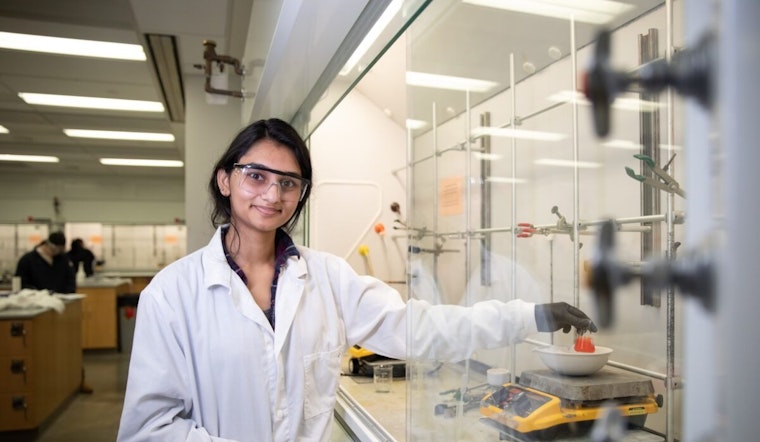
The University of Texas at Austin has blasted past a significant financial milestone, with research expenditures topping $1 billion for the first time in the university's history. This eye-opening figure signifies a 25 percent increase compared to the previous fiscal year and is a testament to the university's burgeoning position as a global research heavyweight.
According to a recent report from the University of Texas, the fiscal year 2023 saw the institution conduct $1.06 billion in research, dragging more than 4,000 projects across diverse fields such as energy, life sciences, and artificial intelligence. "Surpassing the $1 billion mark sends a strong signal that UT is one of the world's top research institutions," UT President Jay Hartzell told their university's news platform.
Boosting UT's research prowess are substantial grants from federal agencies. Highlights include a grant for the Texas Advanced Computing Center enabling its transition to Stampede3, a formidable new supercomputer poised to elevate high-performance computing in the AI era. Another sizable grant from the Department of Energy supports an expedition, spearheaded by Peter Flemings at the Jackson School of Geosciences, to investigate methane hydrate beneath the Gulf of Mexico's seabed, potentially unlocking a future energy resource.
Funding also underpins advances in public health and technology. The National Institutes of Health backs a study led by sociologist Chandra Muller aimed at shaping interventions for Alzheimer’s disease and dementia sufferers. The College of Natural Sciences, alongside the Cockrell School of Engineering, is developing innovative materials with a mind toward next-generation applications, including a smart window coating designed to optimize lighting in correspondence with a building's heating and cooling needs. "It can take years for research discoveries made in an academic setting to have real-world impact," Vice President for Research Dan Jaffe said, proudly highlighting UT's knack for securing funds and fostering breakthroughs with far-reaching benefits.
The record-breaking figure paves the way for UT to potentially ascend in the national rankings of research institutions. Sponsored by the National Science Foundation, the HERD Survey serves as a critical gauge for R&D spending across U.S. colleges and universities, marking milestones like UT's billion-dollar feat and setting a competitive backdrop for the country's academic powerhouses.





