

























































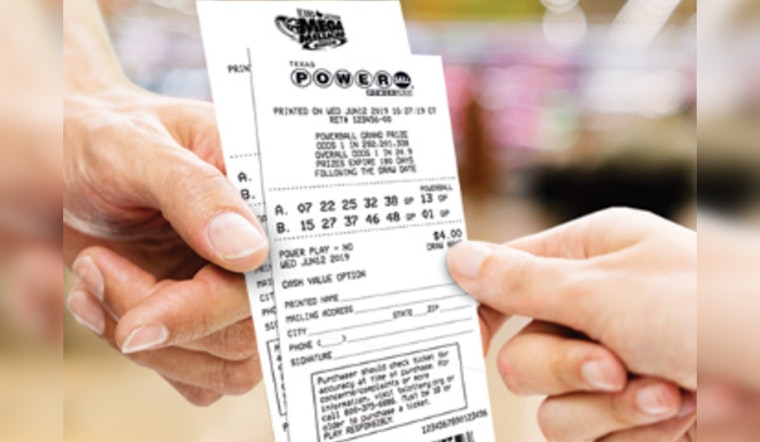
The jackpot fever is spiking as Powerball and Mega Millions lotteries reach a staggering combined total of $1.52 billion, with Powerball at an estimated $645 million and Mega Millions at $875 million, making it the game's sixth-largest jackpot in history. As hopeful players dream up ways to tilt the astronomical odds—1 in 292.2 million for Powerball and roughly 1 in 302.6 million for Mega Millions—in their favor, theories about playing in frequently winning or historically unlucky states are swirling, according to KXAN.
An analysis of past Powerball winners shows that since 2003, only five out of the 49 participating jurisdictions have never sold a jackpot ticket, while for Mega Millions, starting from 2002, 18 states plus the Virgin Islands are still waiting for their first jackpot glory, with some punters believing these 'due' states might just tip the scales, as reported by The Hill. The lottery scape is scattered with varying degrees of fortune, or the lack thereof, from Michigan's recent $842.4 million Powerball win, the first since 2020, to regions like Idaho and New Mexico who've been in a lottery drought since the mid-2000s; meanwhile, states like California have been hitting it big with Mega Millions, bagging a $394 million jackpot with two tickets sold at a single gas station in December, but again Idaho appears as the most overdue for a Mega Millions jackpot, not having sold a major winning ticket since 2011.
If you're one of those who subscribes to the "due for a win" theory, then the miles might just seem a small price to pay for a shot at becoming a multimillionaire overnight, with the excitement and anticipation of the next big win igniting the collective dreams of lottery players across the nation.





