

























































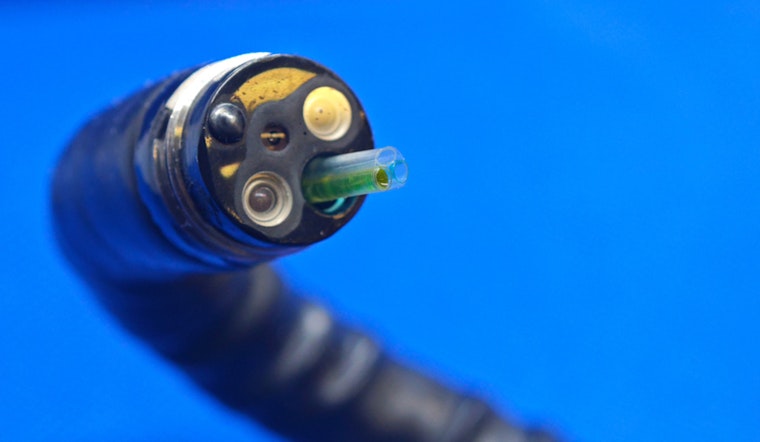
A revolutionary gel developed by MIT researchers promises to make gastrointestinal surgeries, including colonoscopies, simpler and safer. The new adhesive gel, known as GastroShield, can be sprayed on during endoscopic procedures to prevent common complications such as bleeding and leakage, potentially benefiting over 20 million Americans who undergo such screenings each year.
Traditional methods of dealing with bleeding, like cauterization, pose their own risks and can hamper the healing process. The GastroShield gel, however, adheres to weakened gastrointestinal tissue and forms a protective layer, reducing the risk of post-procedure complications. As reported by MIT News, Natalie Artzi, a principal research scientist at MIT and the senior author of the paper on the gel's development, said, "Our tissue-responsive adhesive technology is engineered to interact with the tissue via complimentary covalent and ionic interactions as well as physical interactions to provide prolonged lesion protection over days to prevent complications following polyp removal, and other wounds at risk of bleeding across the gastrointestinal tract."
The problem with existing gels has been their inability to stay attached to the surgery site for more than 24 hours. This gel, tested initially on animals, showed that it forms a strong, flexible barrier that lives up to the movement and harsh environment of the gastrointestinal tract. It remains effective for three to seven days, protecting the wound as it heals, then naturally sloughs off with the body's tissue regeneration cycle.
GastroShield seems to be, well, a shield for the digestive system. Its development has been driven by the need to better protect surgical sites without resorting to problematic methods like using metal clips, which are not always effective. To effectively be able to deliver the solution through endoscopic tools, the team came up with a special mix including a polymer called pluronic and an oxidized dextran, which provides the strength and flexibility required. As Artzi explained in the research announcement, "To obtain a material that adheres to the design criteria and can be delivered through existing colonoscopes, we screened through libraries of materials to understand how different parameters affect gelation, adhesion, retention, and compatibility."
There's also economic sense behind making the gel easy to use: it is stored in liquid form and requires no special activation, which means it could be readily integrated into current medical practices. The team at MIT, along with their startup BioDevek, are now pushing forward to bring the gel for clinical use in humans. Beyond its application in colonoscopies, GastroShield could prove beneficial in treating stomach ulcers, Crohn's disease, and in delivering drugs for cancer treatment.
Funded in part by the National Science Foundation, this innovation could be a game-changer for millions. While the prospect of undergoing a gastrointestinal procedure is seldom pleasant, it might soon become less daunting, with the promise of fewer complications and a smoother healing process thanks to cutting-edge research and applied science.





