

























































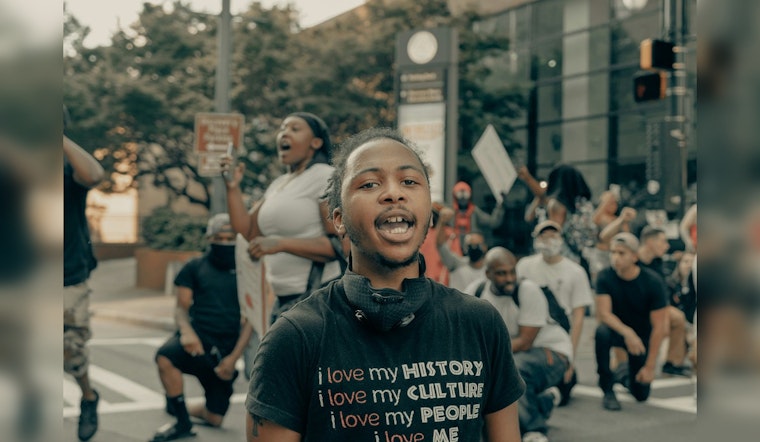
A new report released by the Austin Justice Coalition and Measure, a data activism nonprofit, shines a light on the persistent disparities facing Black residents in Austin, according to the Austin Monitor. The study, titled "The State of Black Lives in Austin," points to a city that has repeatedly failed to invest in its Black communities, despite initiatives announced with fanfare over the years.
The report, which spans 64 pages and for the first time since 2008, offers up hard numbers for activists to use when approaching policymakers, it bears facts that show the grim reality of unfulfilled promises made to the African American community. As Measure founder Meme Styles put it, "It’s us reclaiming the power of data that was taken from us…That was originally taken from us," revealing the use of data as a tool for enforcing accountability, addressing the Austin City's lack of seriousness in meeting the urgent needs of its Black population. "Year in and year out, it’s these really big promises, but then when you go to cash a check, it bounces," Chas Moore, Austin Justice Coalition founder, told Austin Monitor.
The findings of the current document do not paint a brighter picture when contrasted against the African American Quality of Life Report from 2008, which outlined 56 initiatives to improve life for Black Austinites, most of which have fizzled out without sustainable impact or verifiable outcomes. The Mayor’s Task Force on Institutional Racism and Systemic Equities in 2017 seems to have met a similar fate with proposed projects falling flat, leaving the black community’s conditions static or worsening despite the tall claims.
Reaffirming Black Austinites' experiences of police violence and misconduct, disparities in traffic stop and arrest statistics put forth by the document reveal racial bias within the legal systems, the study calls for investment in services that could reroute the current dealing, especially in social services and mental health resourcing while suggesting alternative approaches to community safety, such as conflict resolution and restorative justice frameworks. When it came to arts funding, Black communities received a disproportionally low investment, with statistics showing Black musicians facing discrimination in the city's much-celebrated music scene a staggering 93 percent of the time when trying to book shows.
In economic terms, the divide is just as stark, with Black families earning significantly less than their white counterparts. Equally alarming were the findings on the health front, where life expectancy and mortality rates tracked along racial lines and domicile locations, solidifying the call for a multi-sector approach to healthcare that considers social determinants. The study identifies this disparity as an urgent cry for "equitable development strategies” and highlights the need for "targeted interventions and resources" to support Black individuals and families, particularly those affected by homelessness.
Instead of recommendations, the authors of "The State of Black Lives in Austin" demanded answers and accountability from city officials, posing questions to policymakers in an unfinished concluding chapter of this report, signaling the continuance of a struggle that calls for more than just empty promises. Despite the sobering statistics, the study emphasizes a forward-looking, Afro-futuristic perspective imbued with hope, imagination, and the "essence of what if," as Styles mentioned in the Austin Monitor.





