

























































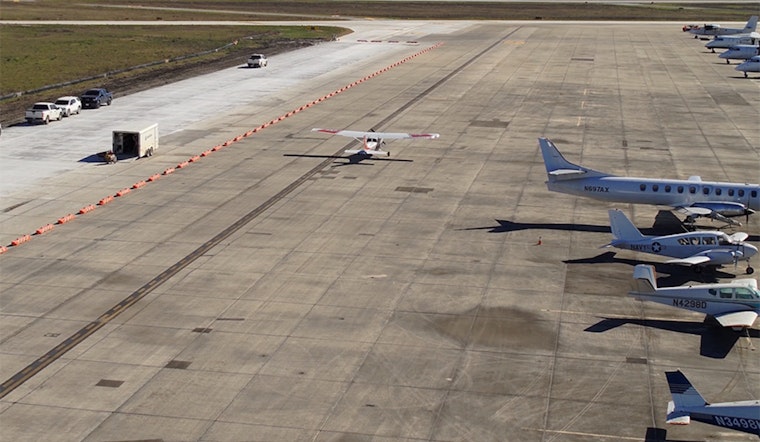
As Texas gears up for the solar spectacle set to darken our skies on April 8, the FAA is cautioning about potential crowded airspace, but let's not forget the ground game where the airports themselves are prepping up for an influx of eclipse enthusiasts. San Marcos, along with many other Lone Star state airports, braces for a flood of visitors, all while undergoing significant improvements to keep their runways in top-notch condition.
Typically a non-headliner, San Marcos Regional Airport joins several others in a rehab mission, guided by the state's Aviation Capital Improvement Program. Texas Aviation Partners' VP Cassidy Berenato highlighted the urgency of the upgrades, saying, "The airport is original World War II, which means the concrete on those taxiways has been here since the 1940s." She confessed to TxDOT, "So they weren't in the best of shape, and that's a safety concern for us."
These renovations are more than mere cosmetic changes; they're about maintaining vital links that support both local economies and statewide prosperity. General aviation airports in Texas bolster over 48,000 jobs and inject a hefty $9.3 billion into the economic machine, per a 2018 study. The improvements are especially critical when considering their role in disaster relief. As TxDOT Aviation project Manager Ed Mayle put it, keeping these airports up and running is "vital" for more than just the aviation enthusiasts; it touches upon everyone from farmers to first responders.
With the eclipse looming, these normally quieter airfields anticipate a rare rush of astronomy buffs. Locations like San Marcos are nearly spot-on for the prime view, which means these parking lots could quickly turn into celestial viewing parties. Despite not being smack in the path of totality, San Marcos and its kin are ready to welcome the overflow. Berenato assures, "We're not entirely sure what to expect for the eclipse at this point, but we're preparing." According to a statement obtained by TxDOT, she added, "We'll be ready and we hope to see at least some people out here to watch it with us."
And once the cosmic show fades, what remains is the enduring relief of improved infrastructure. Mayle reflected on the projects' extensive benefits: "It's a great accomplishment. You walk away from a project like this knowing that the end product is good for another 50 to 80 years. So that's what we want," he told TxDOT. For observers and aviators alike, something is reassuring in knowing that as they gaze upwards, the ground beneath them is more solid than ever.





