

























































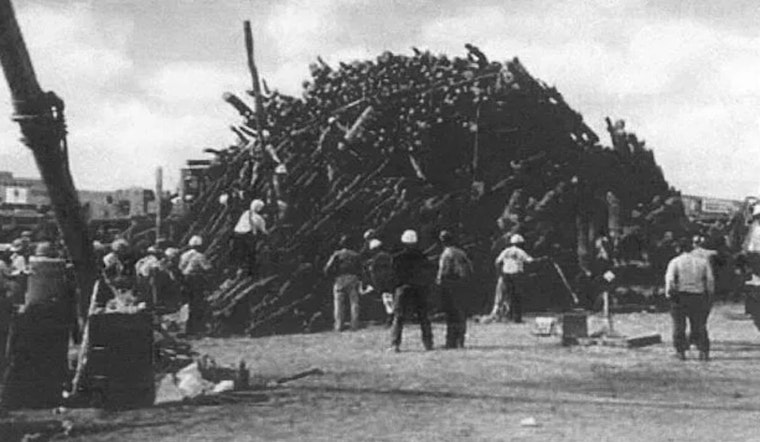
The Texas A&M University Board of Regents is considering the revival of the storied bonfire tradition, paused since 1999 when the horrific collapse killed 12 students and left an indelible mark on the school's history. Student-led construction of the towering 60-foot stack went horribly wrong nearly 25 years ago, trapping attendees amid blood and screams while responders worked feverishly among the chaos, harrowing memories from survivors and witnesses like Bruce Unger and then-student body president Will Hurd who told News 4 San Antonio within an hour of the collapse, they were drowning in disbelief amid the catastrophe unfolding like a scene from the worst of nightmares.
According to a Texas Tribune report, Texas A&M president Mark Welsh formed a committee to potentially restore the tradition with oversight, stirring opposition, especially regarding current students' safety who participate in off-campus unsanctioned bonfires, regent John Bellinger shared in his letter to the victims' families, this concern while seeking their input on the matter. Bellinger cited minimal oversight and significant risk factors at these unsanctioned events, implying that bringing back the bonfire under university stewardship could mitigate these dangers; yet, this rationale is not altogether convincing some who see this outreach as ticking a box.
Witnesses from the tragic event still recall the turmoil, with Congressman Hurd, who rushed to the site, recounting the panic, confusion, and the fear that gripped everyone when faced with the immediate danger of the unstable pile of logs; and the bonfire's first student first aid responder Carrie Lunceford citing "divine intervention" that prevented worse outcomes, with ten people showing up for a shift that only required three, as shared with News 4 San Antonio. Randy Escamilla, then a reporter, remembers arriving to the shock of students, injured and bewildered, as everyone grappled with the magnitude of the disaster. The personal stakes were represented most starkly by survivor John Comstock, the freshman who spent 83 days in ICU and lost a leg yet remained hopeful for full recovery, he said months after his life-altering ordeal.
Despite this painful legacy, some alumni like Rodney Hitch, who fondly remembers his bonfire days in the 70s and conversations with News 4 San Antonio, might see a revival as a nod to tradition. The bonfire was once emblematic of the Aggie spirit and its fierce rivalry against the University of Texas-Austin, as ancient campus handbooks touted it symbolized a fervent desire to win and an eternal flame of love for the school. Yet, as regents deliberate and prepare to present their recommendations to President Welsh in May, the dark shadows of the past caution against a simple relighting of old flames.





