

























































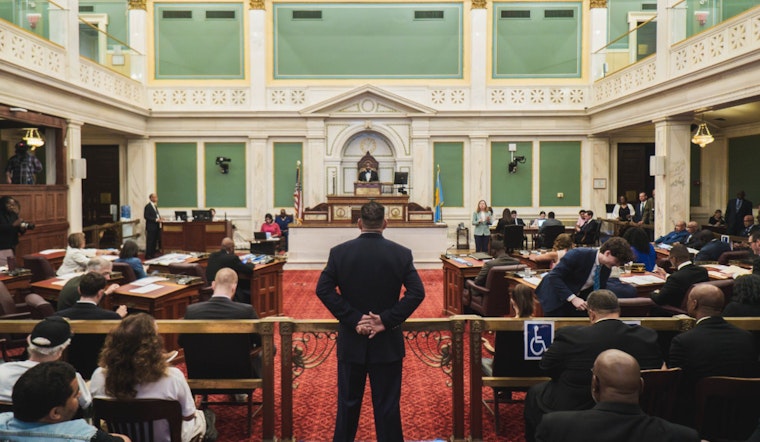
Philadelphia's battle with nuisance businesses and crime continues as City Council proposes spreading Kensington Avenue's business curfew measures to other neighborhoods. Councilmembers' recent moves show a clear trend in the city's strategy to address disturbances caused by all-night convenience stores and other late-night establishments.
Earlier this year, Councilmember Quetcy Lozada spearheaded the enactment of a late-night curfew for businesses along Kensington Avenue, with a particular focus on those selling drug paraphernalia and running illegal gambling operations. This initiative, seen as a crackdown on the open-air drug market that plagues the area, now seems to be setting a citywide precedent. On Thursday, three additional council members introduced similar legislation for their respective districts, as reported by The Inquirer. However, businesses holding liquor licenses are exempt from this curfew, leaving local bars and taverns unaffected. Offenders of the proposed curfew could face fines up to $500.
These curfews are not without their supporters in the Council. The recent proposals follow the implementation of Lozada's curfew measure in Kensington two months ago, a policy designed to keep smoke shops, corner stores, and take-out joints closed during late-night hours where such amenities reportedly attracted unruly crowds. According to KYW Newsradio, Lozada endorses the expansion of her curfew initiative to other areas beleaguered by similar troubles.
The curfews, which would take effect between 11 p.m. and 6 a.m., target businesses that do not serve alcohol in an attempt to quell nighttime disturbances, including crime, and illicit activities like illegal gambling. As noted by NBC Philadelphia, three City Council members are advocating for this approach in different parts of North Philadelphia following the perceived success of the Kensington bill.
Philadelphia clearly is taking a firm stance against crime and disorder as these business curfews gain traction across the city. The move to extend curfew laws signal the Council's commitment to curbing late-night activities that are associated, with negative impacts on community safety and quality of life, an issue that remains a high priority for both city officials and residents alike.





