

























































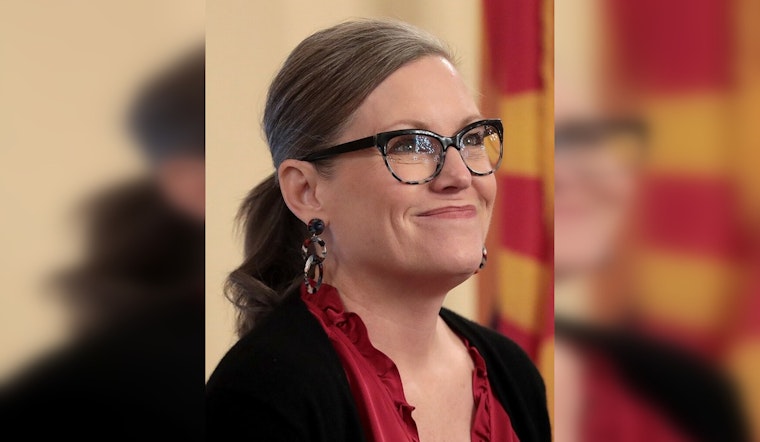
Amidst a storm of fiscal uncertainty, Arizona Governor Katie Hobbs has placed her signature on a series of budget bills, moving past a $1 billion shortfall with strategic cutbacks, according to a recent update from AZPM. The state's economic blueprint now features reduced funding for higher education, slimmed allocations to state agencies, and the diversion of monies from designated special funds. Announced over the weekend, this financial plan was birthed from negotiations that spanned several weeks between Democratic Governor Hobbs and Republican legislative leaders.
"Despite facing a $1.8 billion budget deficit, we showed Arizonans that we can work across the aisle and compromise to balance the budget and deliver for everyday Arizonans," Hobbs said, outlined in a statement that painted a bipartisan collaboration, though this canvas of compromise was marred to some extent by discord among the ranks, with conservative Republicans branding the plan as too spendthrift and several Democrats expressing frustration over exclusion from the bargaining table. Just a year prior, the situation could not have been more different; an envisioned surplus had led to a generous budget process where lawmakers allocated funds for their districts' own diverse needs and projects.
The current fiscal pivot has its roots in the stark revelation that the state's coffers were bleeding out, collecting significantly less revenue than anticipated. The contentious path to the budget's final form is seen by many as a reflection of the broader ideological struggles within American governance, wherein the push and pull between fiscal conservatism and investment in the public good often leaves both sides holding only pieces of their envisioned policy outcomes. With Hobbs at the helm, the budget that now sets the course for Arizona involves postponing, and in some cases eliminating, previously approved expenditures.
These adjustments come as a stark contrast to the previous year, where an abundance of resources enabled freer spending—yet, the swift change in fiscal winds compels a sobering constriction of the state's financial belt. As outlined by AZPM, the comprehensive plan seeks to forge a path of stability, though, it stands on a battleground of compromise where it seems no single faction within the state's political sphere can claim absolute victory or satisfaction.




