

























































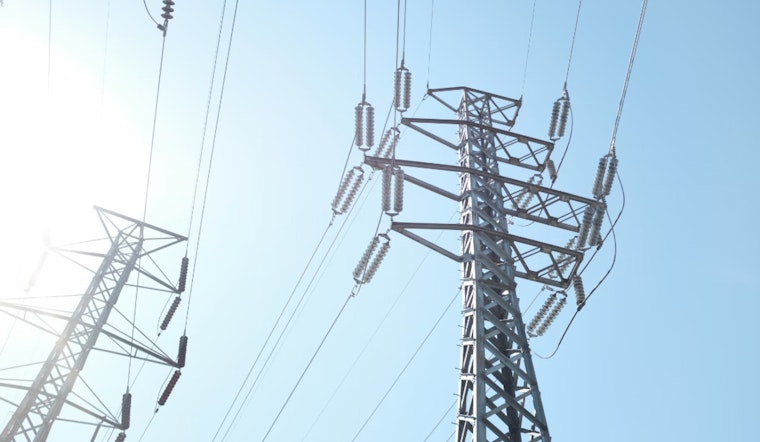
Imagine a traditional power line carrying five to 10 times the power without altering the familiar landscape of our neighborhoods. This vision is inching towards reality thanks to a Massachusetts-startup VEIR, spearheaded by alum Tim Heidel, aiming to revolutionize our power grids with superconducting transmission lines. As MIT News reports, VEIR's technology promises to transport increased amounts of power using the same infrastructure and with minimal visual impact, a key advantage in overcoming community opposition and regulatory barriers.
Last year, in a demonstration project in Woburn, a 100-foot segment of cable showcased the potential of this new technology. Traditional power lines usually face high hurdles due to their intrusiveness and the decade-long timelines that can often accompany high-power transmission projects. However, VEIR’s superconducting cables, which employ a proprietary cooling system capable of transmitting up to 400 megawatts initially, aim to carry the current load demands within an unobtrusive design. According to Tim Heidel as stated in the MIT News interview, "We can deploy much higher power levels at much lower voltage, and so we can deploy the same high power but with a footprint and visual impact that is far less intrusive."
VEIR's innovation couldn't be more timely. The demand for electricity is soaring, fueled by the proliferation of data centers, increases use of artificial intelligence, and the gradual transition to electric vehicles and heating systems. Compounding this demand is the White House's assertion that to meet 2035 decarbonization goals, the U.S. must more than double its current transmission capacity. The traditional approach to bolstering power infrastructure is beset by operational delays and rising costs, creating a gap that VEir’s superconducting transmission lines could potentially bridge.
Armed with an extensive background, including a PhD from MIT and experience at the Department of Energy's ARPA-E and Bill Gates’ Breakthrough Energy Ventures, Heidel's expertise has shaped VEIR's trajectory. The startup's lines are not only transformative in capacity but also in form factor. They are being designed to melt into the existing environment, thus curtailing the typical community pushback such projects garner. "High power requires high voltage, and high voltage requires tall towers and wide right of ways, and those tall towers and those wide right of ways are deeply unpopular," Heidel told MIT News.
Looking ahead, VEIR targets 2026 for completion of its first pilot project at commercial scale. With an already burgeoning pipeline of interested clients including utility companies and renewable energy developers, the startup is gearing up to play a central role in a cleaner energy future. The full capability of VEir’s lines, which could eventually transmit several gigawatts of power, pinch points a horizon where meeting global energy demands and environmental goals could become a concurrent achievement.



