

























































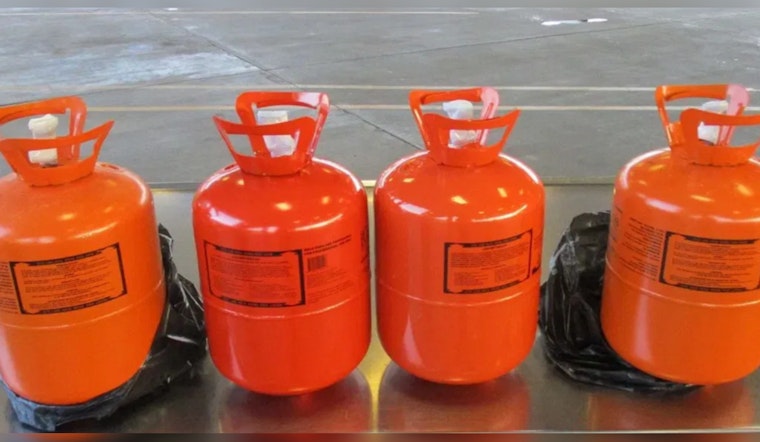
Travelers heading to the U.S. from Mexico via the Laredo border crossing are receiving a stern reminder from U.S. Customs and Border Protection (CBP) officers: bringing Freon canisters into the country without proper authorization is a violation of federal law. According to a recent notification by CBP, violators risk potential fines, vehicle seizure, or even federal prosecution for illegally importing hydrofluorocarbons (HFCs), the gas found in Freon canisters which are heavily restricted due to their high global warming potential.
As reported by FOX San Antonio, "We want to strongly remind the traveling public not to bring in Freon canisters from Mexico as that is contrary to existing federal law and may result in fines or vehicle seizure, even federal prosecution," stated Donald Kusser, Director of Field Operations at the Laredo Field Office, enforcing laws that include the American Innovation and Manufacturing Act of 2020, and the Clean Air Act, which expressly prohibit such importation in non-compliance with Environmental Protection Agency restrictions.
The Laredo Morning Times further elaborates on the legalities, highlighting the EPA's classification of HFCs as significant contributors to global warming due to their high global warming potential which can be hundreds to thousands of times greater than carbon dioxide. The sale of Freon smuggled into the U.S. is also illegal under these stringent environmental protection laws.
Beginning January 1, 2022, strict EPA regulations came into force which only allow for the importation of bulk regulated HFCs by those with a special consumption or application-specific allowance issued by the EPA; this ruling is a critical element of the broader initiative to mitigate the climate change impact which insurgent countries might be tempted to overlook, "No person may sell or distribute, or offer for sale or distribution, any regulated HFC that was imported illegally," CBP reiterated in their statement obtained by Laredo Morning Times. Illegal importation of such canisters poses an environmental risk, reflecting a larger puzzle of climate regulation and enforcement that straddles borders and national protocols.





