

























































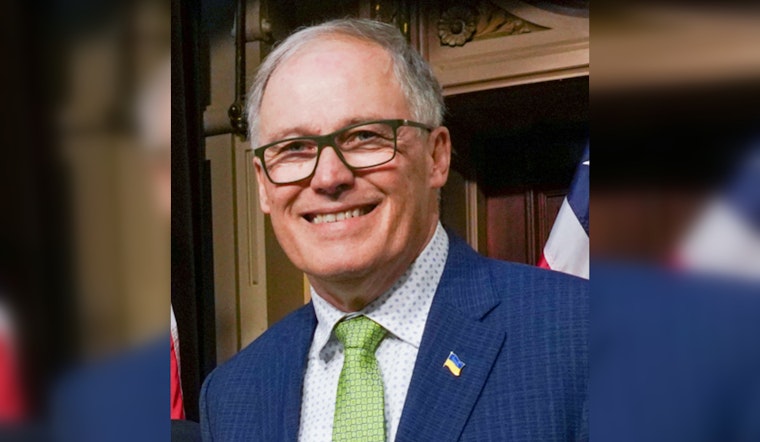
As Gov. Jay Inslee's tenure approaches its end, Washington state is embroiled in a debate that could dismantle his signature climate achievement, the Climate Commitment Act (CCA). Inslee, who is not seeking a fourth term, has been vocal in defending the effectiveness of the CCA as it faces potential repeal by Washington voters this November.
The Act, designed to slash carbon pollution and fund eco-friendly investments, is credited with funneling over $1 million into the creation of wireless bus charging stations west of Seattle. During his public appearances, Inslee has repeatedly attributed such projects to the critical backing of the CCA, pointing out alternatives would be improbable without it. "It's possible only because of the Climate Commitment Act," Inslee remarked at a recent transit center visit, as mentioned in a KOMO News article.
The law, which established a carbon pricing system through a quarterly emissions allowance auction, arrived after Democrats gained legislative control and has seen Washington emerge as only the second state after California to initiate such a program. These auctions have helped amass more than $2 billion, subsequently allocated for transportation, education, and even $52 million for tribal climate change responses, as reported by ABC News. Despite this, a campaign led by the conservative group Let's Go Washington, primarily funded by hedge fund executive Brian Heywood, insists the law has caused a surge in the state's already high gas prices, providing the grounds for their push for repeal.
Arguments against the CCA hinge on its alleged impact on gas prices, with critics claiming an increase of 43 to 53 cents per gallon. "For Washington state commuters, those pennies are adding up to hundreds of dollars lost to a program that has not done what it was advertised to do," contends a statement from Let's Go Washigton obtained by ABC News. Inslee has refuted such assertions, pointing to the volatility of gas prices and noting the historic highs in the past were unrelated to the carbon pricing program.
The stakes of the repeal are not only high for the state but also for potential multi-state collaborations. Inslee's administration is working on integrating Washington's carbon market with those of California and Quebec, a move that could render the market more efficacious. An affirmative vote on the repeal would not only undermine regional efforts but could "create a freeze and slow down states, maybe even the country's action on addressing the climate crisis," David Mendoza, director of policy and government relations at The Nature Conservancy in Washington, told ABC News.





.jpg)