

























































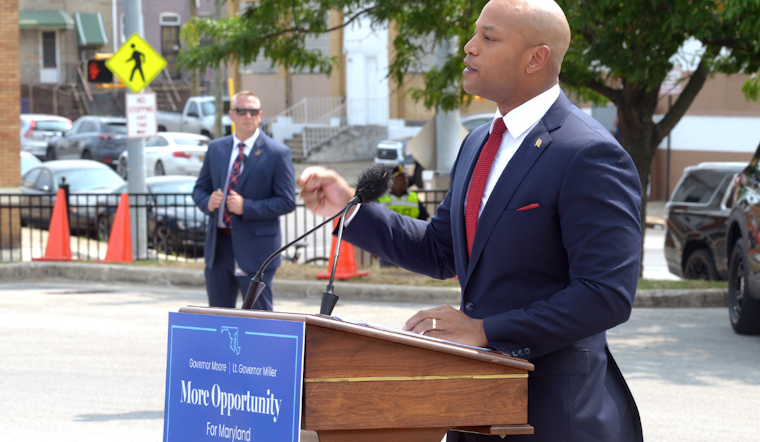
Amidst chatter about President Joe Biden's potential run for a second term, Governor Wes Moore of Maryland attended a gathering with fellow Democratic leaders at the White House on Wednesday. This comes in the wake of a debate performance by Biden on June 27 that fueled speculation on his future political endeavors. "There’s no one who watched the debate last night that thinks that President Biden had a great night," Gov. Moore said, as reported by FOX45 News, while affirming his support for the Biden-Harris administration.
Moore reinforced his stance by expressing that the results under President Biden's leadership are "undeniable in all of our individual states," Moore stated, according to CBS News. Despite the criticism surrounding Biden's debate performance, particularly an instance where he lost his train of thought, Democratic governors maintain their belief in his capabilities to lead the office. Former White House communications director Kate Bedingfield was one of the voices acknowledging Biden's disappointing debate.
Political Analyst John Dedie speculated on a potential Biden withdrawal and suggested Vice President Kamala Harris would be a natural successor, with the Democratic Party's robust African American female voting bloc considered as a factor. Dedie's analysis, shared by FOX45 News, highlights the strategic considerations within the party. The White House meeting with Democratic governors, as reported by FOX45 News, signifies a unified front amidst the Biden reelection queries and speculation about potential changes in the party's ticket.
Despite a "bad performance" at the debate, as Minnesota Governor Tim Walz described, the support for Biden remains staunch. "None of us are denying, Thursday night was a bad performance, it was a bad hit, if you will, on that, but it doesn't impact what I believe, that he's delivering," Walz stated, as per CBS News. Moore, emphasizing the need for solidarity and optimism, told reporters, "The thing that makes us most optimistic, most hopeful, is not necessarily that we're afraid of an alternative, but also is that we're hopeful for the future."



.jpg)